Capturing the beauty of life, one moment at a time.

Like Coming Home: A Visit to the Jewish Museum in New York
There are places you enter for the very first time — and feel you have always been there. That is what happened to me at the Jewish Museum in New York. Sue, a dear friend, introduced me to Larissa — a guide at the museum, who within minutes became a new friend of my own. Larissa gave me a private tour of the main exhibition, Identity, Culture, and Community: Stories from the Collection of the Jewish Museum curated by Darsie Alexander, Senior Deputy Director and Susan and Elihu Rose Chief Curator; Claudia Nahson, Morris and Eva Feld Senior Curator; Kristina Parsons, Leon Levy Assistant Curator; and Rebecca Frank, Curatorial Assistant. I almost laughed to myself — this is exactly what I have been working on my whole life. The exhibition felt as though it were speaking to me in my mother tongue.

Andi Arnovitz, What We Bring — artist's own wedding dress, laser-cut bookbinding cloth, threads
I stopped in front of a wedding dress by the artist Andi Arnovitz, a piece titled What We Bring. Above — white, delicate lace. And beneath it, where a train would be, names spilled onto the floor. Names of Jewish women, cut from paper, piling one upon another like a waterfall. I stood there a long moment. I thought of all the names I carry within me — Dr. Rachel, Elsa Freund, my grandmother, who packed apple saplings and a piano in Germany and came to the Land of Israel at the very last moment. One dress, and beneath it, generations of women. This is exactly where my art lives: to take a single name, a single fragile moment — and to sanctify it before it disappears.

Credit: Arlene Shechet, Travel Light, 2017 (gypsum, resin, and candles)
And then I saw it. A suitcase. Made entirely of white porcelain, with candlesticks and small vessels and little pieces of a home heaped on top.
Travel Light, the artist Arlene Shechet called it. She built it from the story of her grandmother, who emigrated from Belarus in 1920 — and the candlesticks were almost the only things she carried with her. I stood before it and could not move. This is my own project, On Our Journey Home, standing before me in porcelain. The very same question that haunted me when I thought of my grandmother: what do you take when you leave everything behind? What fits into a single suitcase? How much hope does it take to pack a candlestick and set out for an unknown land.
Delicate beauty, made on the edge of loss — and still, it remains.
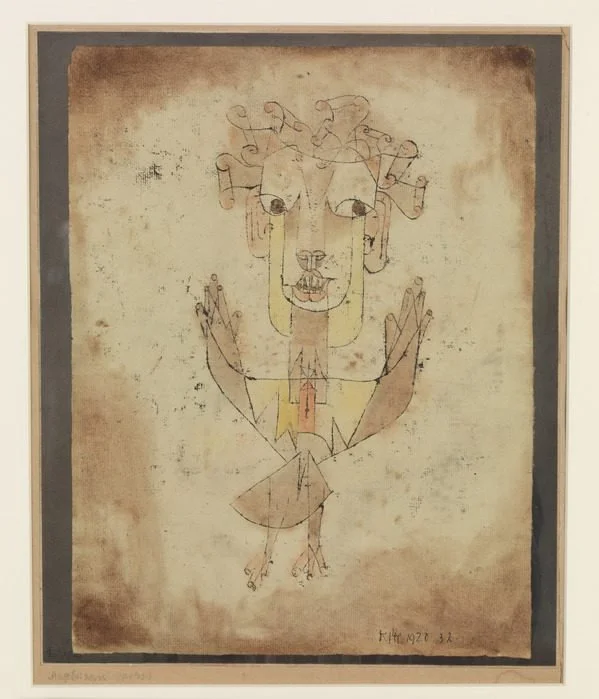
And there was one more wing I could not leave —Paul Klee: Other Possible Worlds, an exhibition devoted to the artist's final, unsettled decade.
The Nazis branded him a "Galician Jew," declared his art "degenerate," and cast it out of every museum in Germany. And he — in exile and in illness — painted his final years out of an immense inner freedom. I stood before his small angel,
Angelus Novus. The painting had belonged to the philosopher Walter Benjamin —the one who wrote of it as the "Angel of History": an angel whose face is turned toward the past, toward the debris of all that has been, while a wind drives him backward into the future. Benjamin revered Franz Rosenzweig's The Star of Redemption— the very thinker to whom my grandmother Rachel devoted her life.
After Benjamin's death the painting passed to his friend Gershom Scholem, and from there — all the way to Jerusalem, to the museum where it hangs today. An angel who crossed continents and wars, and in the end found home. It is really the same story, again and again — and perhaps that is why I star print in palladium, a process that survives two hundred years. There is a deep need in me to say to beautiful things: do not go. I am keeping you.
"I cannot be grasped in the here and now, for my dwelling place is as much
among the dead as the yet unborn." — Paul Klee

I left there with a rare feeling. Not that of a tourist who had visited a museum, but of someone who had found a second home. The works spoke to me because they asked the very questions I ask: about belonging, about migration, about what remains when everything changes. The word "hope" — the one that lives in my mind all the time — accompanied me there too, among the white walls, in New York.
And that, perhaps, is what I love most about art: its power to remind us that we are not alone. That women were here before us who packed a suitcase, who kept a name, who lit a candle — and passed it on. To me. And perhaps, through the photographs I make, to you as well.
---
*Michal Greenboim · Artist & Fine-Art Photographer · michalgreenboim.com*
מיכל גרינבוים · אמנית וצלמת · michalgreenboim.com
כמו בבית: ביקור במוזיאון היהודי בניו יורק
כמו בבית: ביקור במוזיאון היהודי בניו יורק
יש מקומות שאת נכנסת אליהם בפעם הראשונה – ומרגישה שהיית בהם תמיד.
כך קרה לי במוזיאון היהודי בניו יורק. סו, חברה יקרה, הכירה לי את לריסה – מדריכה במוזיאון, שהפכה תוך כמה דקות לחברה חדשה. לריסה ערכה לי סיור פרטי בתערוכה המרכזית, תערוכה שעוסקת בתרבות, בזהות ובקהילה יהודית. כמעט צחקתי לעצמי – זה בדיוק מה שאני עוסקת בו כל חיי. הרגשתי שהתערוכה הזאת מדברת אליי בשפת האם שלי.
עצרתי מול שמלת כלה של האמנית אנדי ארנוביץ. מלמעלה – תחרה לבנה, עדינה. ומתחתיה, במקום שובל, נשפכים אל הרצפה שמות. שמות של נשים יהודיות, גזורים מנייר, נערמים זה על זה כמו מפל. עמדתי שם דקה ארוכה. חשבתי על כל השמות שאני נושאת בתוכי – רחל, אלזה, סבתא שלי, שארזה בגרמניה זני תפוחים ופסנתר ועלתה לארץ ברגע האחרון. שמלה אחת, ומתחתיה דורות של נשים. זה בדיוק המקום שבו האמנות שלי חיה: לקחת שם אחד, רגע אחד, שברירי – ולקדש אותו לפני שייעלם.
ואז ראיתי אותה. מזוודה. עשויה כולה מחרסינה לבנה, ומעליה מגובבים פמוטים ובקבוקים ופרטים קטנים של בית. "Travel Light" קראה לה האמנית ארלין שכט. היא בנתה אותה מתוך סיפור סבתה, שהיגרה מבלארוס ב-1920 – והפמוטים היו כמעט הדבר היחיד שנשאה איתה. עמדתי מולה ולא יכולתי לזוז. זה הפרויקט שלי, "במסע הביתה", עומד מולי בחרסינה. אותה שאלה בדיוק שרדפה אותי כשחשבתי על סבתי: מה לוקחים כשעוזבים הכול? מה נכנס למזוודה אחת? כמה תקווה צריך כדי לארוז פמוט ולצאת לארץ לא נודעת.
יופי עדין שנוצר על סף אובדן, ובכל זאת נשאר.
והיה עוד אגף שלא יכולתי לעזוב – התערוכה של פאול קלֶה. הנאצים תייגו אותו כ"יהודי גליציאני", פסלו את אמנותו כ"מנוונת" והוציאו אותה מכל מוזיאון בגרמניה. והוא, בגלות ובמחלה, צייר בשנותיו האחרונות דווקא מתוך חופש פנימי עצום. עמדתי מול המלאך הקטן שלו, "Angelus Novus". הציור הזה היה שייך לפילוסוף ולטר בנימין – זה שכתב עליו את "מלאך ההיסטוריה": מלאך שפניו מופנות אל העבר, אל שברי מה שהיה, בעוד רוח דוחפת אותו לאחור אל העתיד. בנימין העריץ את "כוכב הגאולה" של פרנץ רוזנצווייג – אותו הוגה שסבתא רחל הקדישה לו את חייה. אחרי מותו של בנימין עבר הציור לידידו גרשם שלום, וממנו – עד לירושלים, אל המוזיאון שבו הוא נמצא היום. מלאך שחצה יבשות ומלחמות, ובסופו של דבר מצא בית.
זה בעצם אותו סיפור, שוב ושוב – ואולי בגלל זה אני מדפיסה בפלדיום, הדפסה ששורדת מאתיים שנה. יש בי צורך עמוק לומר לדברים היפים: אל תלכו. אני שומרת אתכם.
"מקום מושבי הוא בין המתים כמו בין אלה שטרם נולדו." — פאול קלֶה
יצאתי משם עם תחושה נדירה. לא של תיירת שביקרה במוזיאון, אלא של מישהי שמצאה בית שני. היצירות דיברו אליי כי הן שאלו את אותן שאלות שאני שואלת: על שייכות, על הגירה, על מה שנשאר כשהכול משתנה. המילה "תקווה" – זו שחיה כל הזמן בראש שלי – ליוותה אותי גם שם, בין הקירות הלבנים, בניו יורק.
וזה, אולי, מה שאני הכי אוהבת באמנות: היכולת שלה להזכיר לנו שאיננו לבד. שכבר היו כאן נשים שארזו מזוודה, ששמרו שם, שהדליקו נר – והעבירו אותו הלאה. אליי. ואולי, דרך התמונות שאני מצלמת, גם אליכם.
מיכל גרינבוים · אמנית וצלמת · michalgreenboim.com

From Light to Code to Metal: Why I Run My Images Through AI and Bring Them Back as Platinum Prints
There is a specific kind of tension I keep returning to in my work.
It lives between the slow, disciplined world of photography and the fast, almost frictionless world of artificial intelligence.
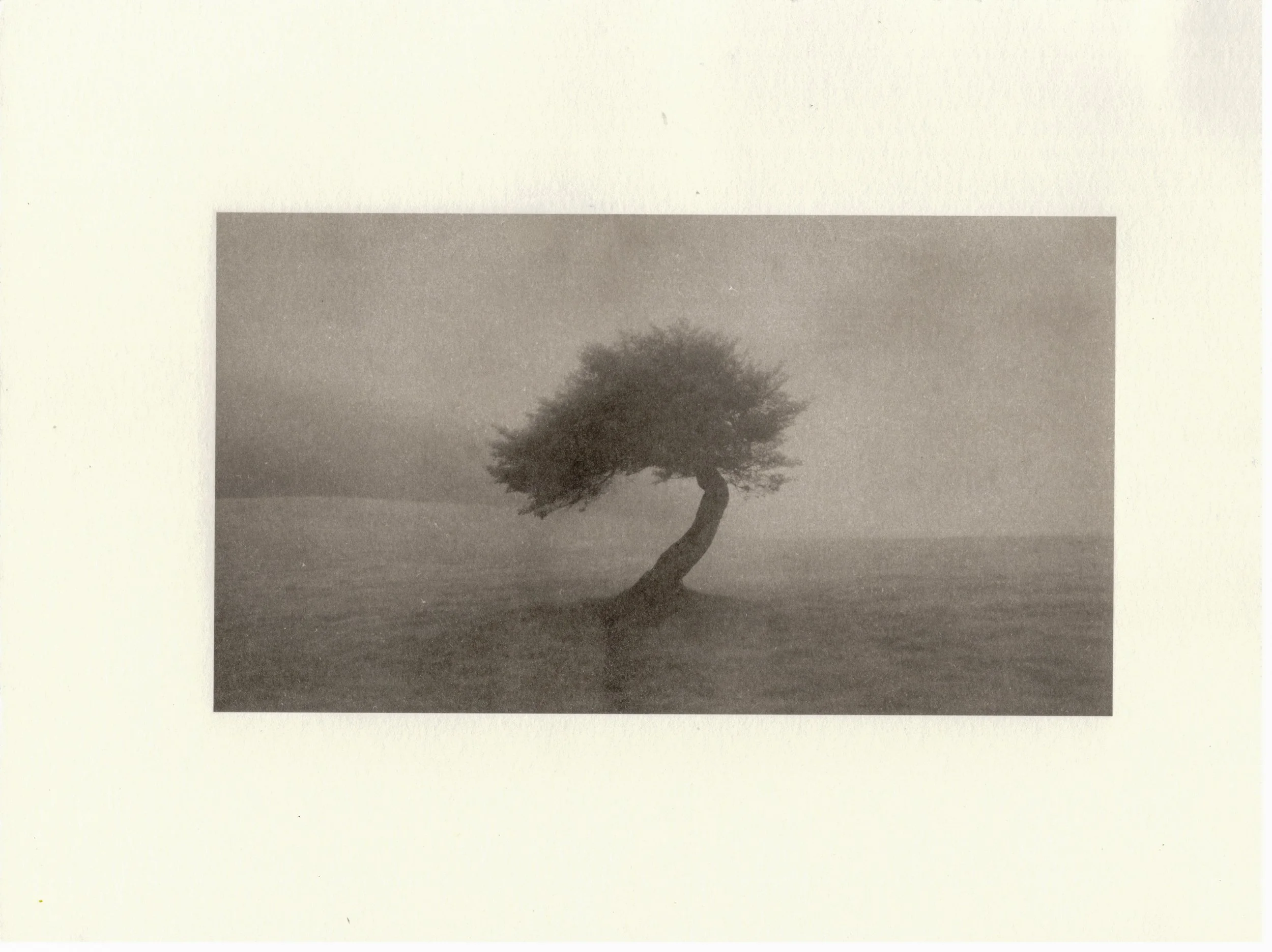
Platinum print, handmade. Origin: original photograph + Midjourney transformation.
Photography taught me patience. You wait for light. You respect reality. You compose without forcing. Even when you plan, the world still has the final say.
AI teaches the opposite. It encourages speed, iteration, and possibility. It asks you to try ten variations in the time it takes to load a single roll of film, and to keep asking: what if?
At first, it sounds like a conflict. But in practice, the two worlds strengthen each other.
The more I work as a photographer, the more demanding I become with AI. I notice when something feels too smooth, too perfect, too generic. I question what is believable, what is precise, what carries a real emotional weight.
And the more I work with AI, the sharper my eye becomes when I return to the camera. I pay closer attention to what truly matters in a frame: gesture, tension, silence, proportion, timing.
This blog post is about one image that traveled through that seam. A photograph I made in the real world, transformed through Midjourney, and then pulled back into the physical world through one of the oldest and most uncompromising photographic processes: platinum printing.
The Journey: Camera - Midjourney - Platinum
I like to think of this process as a three-stage translation.
1) The Photograph: A Moment That Actually Happened
Everything starts with an image that contains something I trust.
Not just subject matter - but atmosphere. A sense of time. A small truth that the camera can hold: a relationship between light and shadow, texture, distance, mood.
The photograph is not a sketch. It is the anchor.
It is the part of the process that cannot be faked, because it is built from observation and presence.
2) Midjourney: Asking the Image a Question
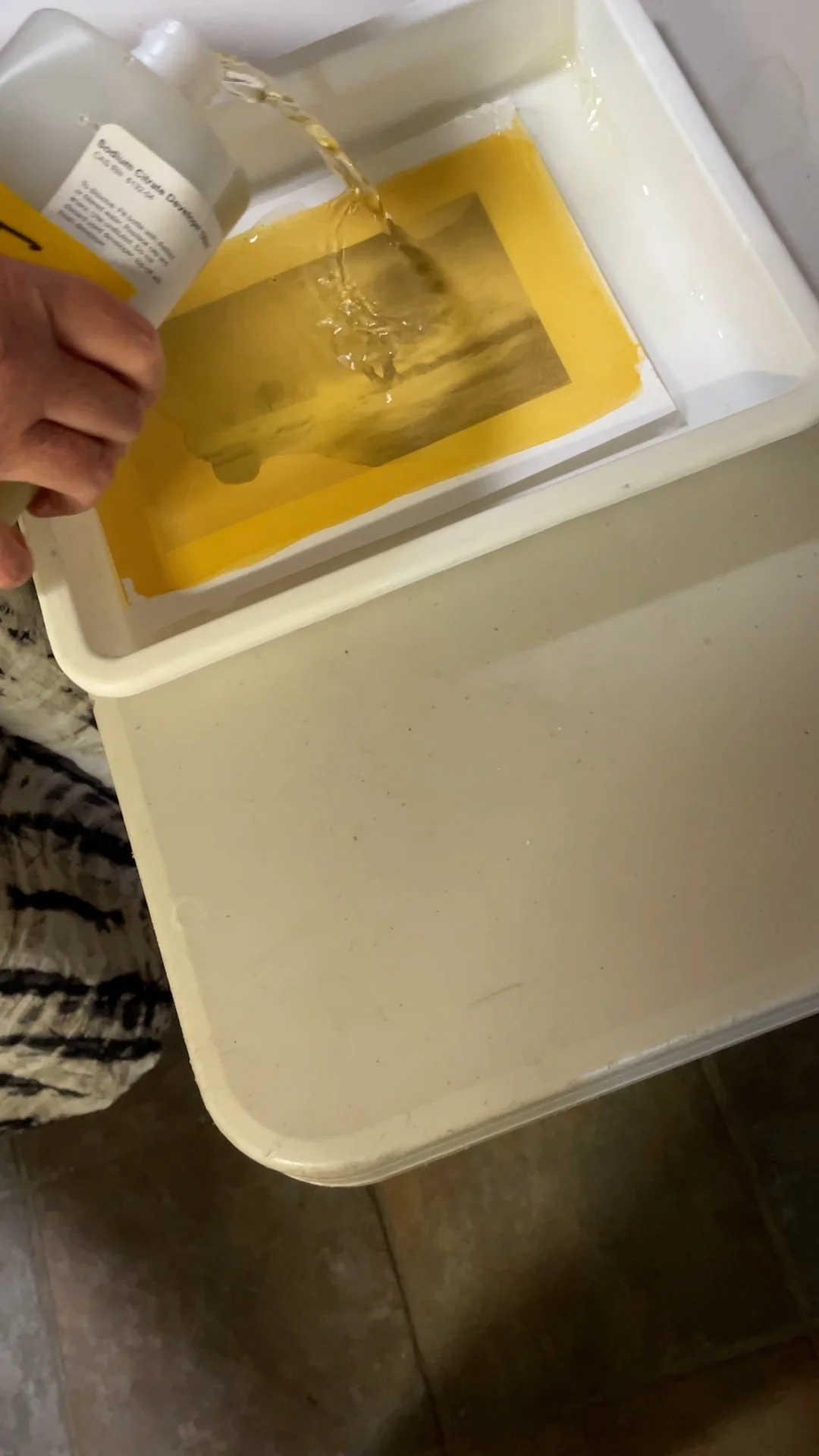
When I bring a photograph into Midjourney, I am not trying to “improve” it.
I am testing it.
I treat the AI stage as a controlled experiment. I ask:
What happens if the image shifts slightly in era, materiality, or mood?
What if the composition stays, but the emotional temperature changes?
What if the same scene becomes quieter, stranger, more symbolic?
In other words: I am not escaping photography. I am interrogating it.
This is where speed becomes useful. AI allows a kind of accelerated seeing.
It makes it possible to explore multiple directions quickly without a heavy production, without building sets, without travel, without a crew.
But it also introduces a real risk: the image can lose specificity. It can become “beautiful” in a generic way.
That is why my photographic eye becomes the filter. I keep what feels true, discard what feels decorative.
3) Platinum Printing: Returning the Image to Matter
After the AI stage, I do something that might seem extreme: I bring the image back into the slowest possible world.
Platinum printing is physical, demanding, and honest.
It is chemistry, paper, coating, drying, exposure, development. It takes time. It requires attention. It is not forgiving.
And that is exactly why I love it.
Because it removes the illusion that an image is just data.
A platinum print is not a file. It is an object. It has weight, surface, and presence. It carries light differently. It changes as you move around it. It asks you to stand still.
Each print becomes a singular outcome, not an infinite copy.
And that shift changes the meaning of the work.
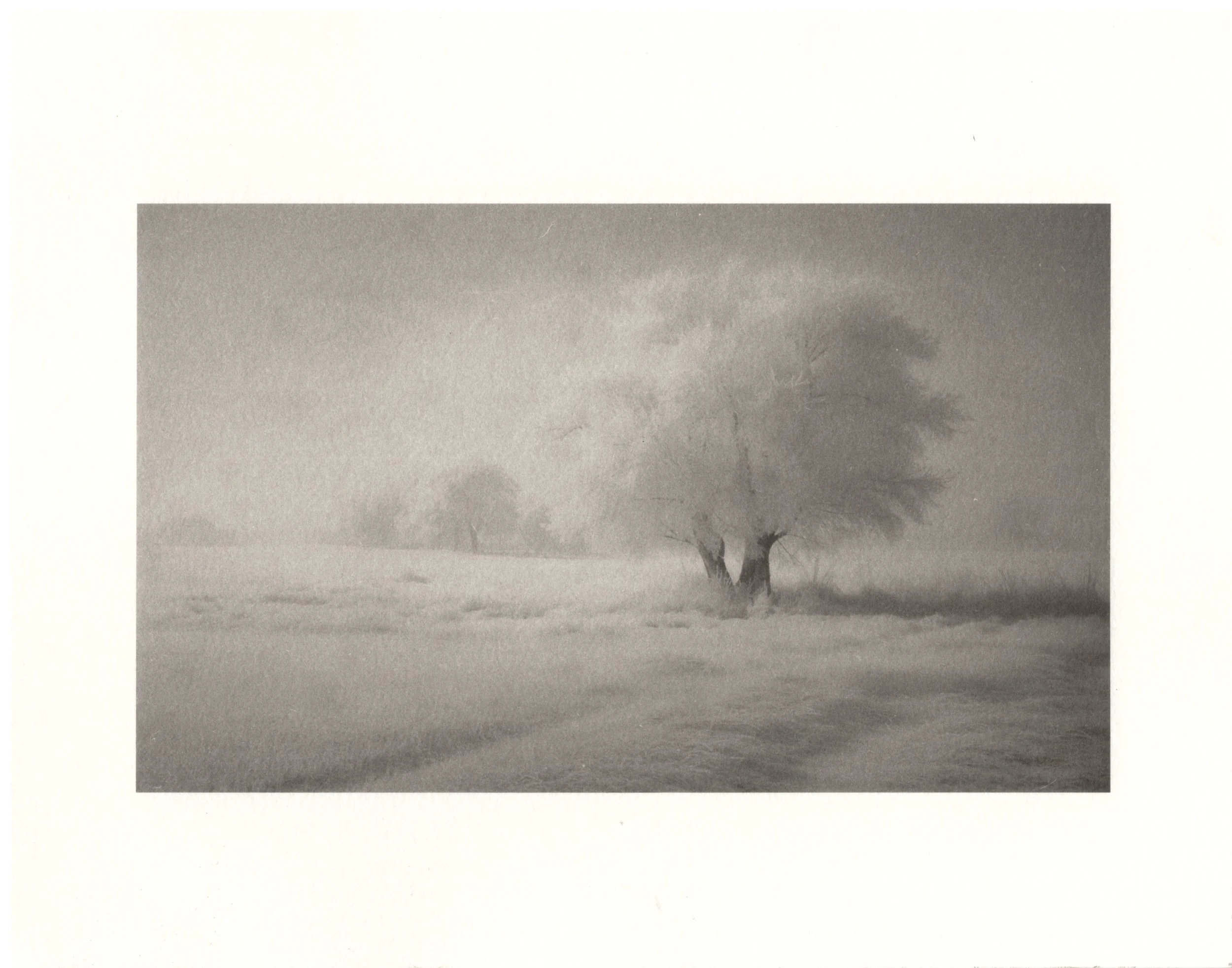
Why This Extreme Contrast Matters
There is something deeply contemporary about moving an image through these extremes:
from captured reality
to algorithmic possibility
to handmade permanence
AI represents abundance: endless versions, endless options, endless speed.
Platinum represents scarcity: one print, one surface, one decision.
And the photograph sits in between as the ethical anchor - the original act of seeing.
When I bring an AI-transformed image into platinum printing, I am asking a very specific question:
Can a digitally accelerated image hold up to a process that reveals every weakness?
If the image survives platinum, it earns its presence.
Because platinum does not flatter. It reveals.
What I Am Really After: A Moment That Holds Truth
I often say that I am not chasing novelty.
I am chasing precision - emotional precision.
Whether I work with a camera or an AI model, I want the same thing:
a moment that holds truth.
Not necessarily documentary truth, but visual truth:
the kind you can feel in the body
the kind that stays with you
the kind that cannot be reduced to a trend
That is why the process matters.
Not as a “cool technique,” but as a way of protecting meaning.
Where This Leads
For collectors, designers, and institutions, this hybrid route creates an unusual object:
a work that begins in real observation, travels through a contemporary toolset, and returns as a rare physical print made by hand.
For me as an artist, it is a way of holding both worlds at once:
the discipline of photography
the freedom of AI
and the integrity of craft
The future is not purely digital. And it is not purely nostalgic.
It is a conversation between time scales.
And this is my way of having that conversation - through images.

מחזורי חיים: אדם, אדמה וזמן

מבוא כללי
תערוכת היחיד של הצלמת מיכל גרינבוים, פרי תכנית הרזידנסי לשנת תשפ"ה במוזאון מזכרת בתיה, מהווה המשך לקו האמנותי-החקרני שהיא מובילה בשנים האחרונות. גרינבוים, צלמת ירושלמית שגדלה בפרדס חנה, שוזרת ביצירתה זהות, מסורת, זיכרון אישי והגות יהודית דרך עדשת המצלמה.
במהלך שהותה ברזידנסי היא התבוננה בנוף המקומי של המושבה לאורך שנה שלמה, פגשה תושבים ותיקים, והצליחה לתעד את הקשר בין האדם לאדמה, בין טבע לזמן, מתוך מבט אישי ופיוטי.
התערוכה מורכבת מארבעה פרקים חזותיים ומעבודה אחת מרכזית וייחודית – סרט קצר נוסף כהשלמה לתהליך. יחד הם מרכיבים סיפור של מחזוריות חיים – בין אדם, אדמה וזמן.
פרק 1 – התחדשות


מה רואים: שלושה דימויים מלאי תנועה וחיים, המציגים רגעים של הנצה, גשם ראשון והתחדשות עונתית.
המסר למבקרים:
הרגע הזה, שבו משהו ישן מפנה מקום למשהו חדש, הוא לב התערוכה כולה. יש בו תקווה, ציפייה, כוח שקט שמבקש לפרוץ החוצה
הפילוסוף רוזנצוויג כותב שכל אחד מאיתנו חדש את העולם בדרכו - והעולם צריך את ההתחדשות ואותנו .
שאלות לשיח עם מבקרים:
מתי לאחרונה הרגשתם התחדשות בחיים שלכם?
האם צמח אצלכם משהו חדש אחרי תקופה של קושי?
פרק 2 – יממה


מה רואים: ארבעה דימויים שמלווים את השמש מהלילה עד הלילה הבא – החל באור עמום של לפנות בוקר ועד אור השקיעה ברגע האחרון.
המסר למבקרים:
.השאיפה שלנו לשגרה – שגם בזמנים הכי מאתגרים, הקביעות של היממה נותנת לנו מעין מרגוע: שתמיד מחר השמש תזרח בבוקר, תשקע בערב, והירח יופיע מלא באמצעו של חודש.
הזמן לא רק נמדד – הוא נחווה. הצללים, האור, והקצב של כל שעה משפיעים על איך אנחנו רואים את המקום ואת עצמנו.
שאלות לשיח עם מבקרים:
איזו שעה ביום הכי קרובה לליבכם – ולמה?
מה אתם מרגישים כשרואים את האור בתמונות הללו?
פרק 3 – מעגל השנה


מה רואים: ארבע תמונות שנעות במעגל השנה היהודי – מסוכות, דרך טבת, קציר חיטה ועד אלול.
המסר למבקרים:
הזמן היהודי עובר בנוף, לא רק בלוח השנה. הסוכה, השיבולים, הדרך הפתוחה – כולם סמלים של שייכות, מחזוריות וזיכרוזמן היהודי עובר בנוף, לא רק בלוח השנה. הסוכה, השיבולים, הדרך הפתוחה – כולם סמלים של שייכות, מחזוריות וזיכרון.
המחזוריות והשגרה מעניקות תחושת יציבות – הן מחברות אותנו לקרקע שיש בה סדר וידיעה. אך דווקא בתוך הסדר הזה, מופיעים רגעים של עצירה והתבוננות: מועדי השנה, החגים, הרגעים בהם אנחנו מוזמנים לשאול את עצמנו מה עבר עלינו, ומה אנחנו לוקחים איתנו הלאה.
שימו לב לצילום של הסוכה – שם, בפתק צהוב קטן, כתובים שמות החטופים. חלקם כבר שבו לביתם, ולחלקם אנחנו מתפללים יום יום שישובו במהרה. הסוכה, שהיא סמל של שבריריות והגנה זמנית, הופכת כך למרחב של תקווה ותפילה.
שאלות לשיח עם מבקרים:
האם אתם מזהים את התקופה או החג בכל תמונה?
איזה חג או עונה הכי מדברים אליכם מבחינה רגשית?
פרק 4 – "עץ אחד" – מיצב צילומי

מה רואים: עשרות דימויים שחוברו ליצירת עץ שלם – חלקים שונים של גזע, ענפים, שמיים ועלים, שצולמו בזמנים שונים.
המסר למבקרים:מה רואים: עשרות דימויים שחוברו ליצירת עץ שלם – חלקים שונים של גזע, ענפים, שמיים ועלים, שצולמו בזמנים שונים.
המסר למבקרים: זהו עץ שיש בו הכול – שונות, מורכבות, אך גם אחדות. הוא כמו החברה הישראלית: כל ענף שונה, אבל יחד – שורשים משותפים, תקווה ועתיד.
העץ הזה מורכב מתמונות שצולמו מכל מיני מקומות – מהסביבה של מזכרת בתיה ועד קיבוץ בארי וקליפורניה. המסר הוא שלמרות שאנחנו שונים, ולא תמיד מתחברים, עדיין יש לנו גזע חזק – ולמרות השוני בינינו, אנחנו כעם מצליחים לתקוע שורשים.
זהו עץ שיש בו הכול – שונות, מורכבות, אך גם אחדות. הוא כמו החברה הישראלית: כל ענף שונה, אבל יחד – שורשים משותפים, תקווה ועתיד.
שאלות לשיח עם מבקרים:
אילו חלקים שונים אתם רואים בעץ הזה?
האם לדעתכם התמונה משקפת את החברה בה אנחנו חיים?
פרק 5 – סרט החלות: "לחם של שבת"
מה רואים: סרט תיעודי קצר המתאר את תהליך הכנת החלות לשבת – לאו דווקא בקדושה המוכרת, אלא בפשטות היומיומית.
המסר למבקרים:
ההכנה לשבת היא רגע מעבר, זמן של השהייה והתכווננות. הידיים שמעצבות את הבצק מבטאות שגרה שהיא גם קדושה.
שאלות לשיח עם מבקרים:
מה הופך פעולה פשוטה – כמו אפייה – לרגע של קדושה?
האם גם לכם יש טקס משפחתי לשבת?

🏡 כך תהפכו דירה ישנה למושכת וחדשה – בלי להשקיע הון בשיפוץ 🏡 Transform Old Apartments into "Like-New" Listings – with the Power of AI
How Real Estate Agents Can Market Renovated Properties More Effectively
Selling an older apartment can be a real challenge. Today’s buyers want modern, move-in-ready spaces—and that’s where I come in.
As a professional real estate photographer and AI expert, I offer a unique AI-powered service that visually upgrades renovated apartments, making them look brand-new without the cost of high-end staging.
Here’s what I do:
Photograph the apartment after a basic renovation
Use AI to remove outdated furniture
Add elegant, modern interiors
Enhance lighting and atmosphere
Deliver high-quality visuals that boost engagement and interest
🎯 Your listing will stand out in a competitive market—and attract serious buyers faster.
Contact me today to turn your next listing into a stunning visual story. 054-9140511

איך בינה מלאכותית יכולה לעזור לסוכני נדל"ן לשווק נכסים טוב יותר
למכור דירה ישנה זו משימה לא פשוטה – במיוחד כשקונים פוטנציאליים מחפשים מראה עדכני, סגנון מודרני, ותחושת "כניסה מיידית".
כאן בדיוק נכנס הפתרון החדש שלי:
שירות צילום, עריכה ושדרוג חזותי של דירות בעזרת בינה מלאכותית.
📸 אני מצלמת את הדירה לאחר שיפוץ בסיסי – וממשיכה את תהליך ההפיכה הוויזואלית באמצעות AI:
מסירה רהיטים ישנים ומחליפה בריהוט מודרני
מוסיפה תאורה טבעית רכה
יוצרת אווירה שמציגה את הפוטנציאל המלא של החלל
כל זה במהירות, באיכות גבוהה, וללא צורך בהשקעות נוספות בשטח עצמו
התוצאה?
דירה ישנה שנראית כמו מהדורה חדשה.
סוכני נדל"ן שיווקו בעזרת השירות שלי דירות שקיבלו הרבה יותר צפיות, לידים, והצעות.
🔗 צרו איתי קשר עוד היום ותנו לנכס שלכם סיכוי אמיתי לבלוט בשוק.
054-9140511


From Empty to Inviting: Transforming art exhibition Photography with Style
As a professional visual artist and AI expert, I’ve developed a unique workflow that helps real estate agents showcase properties in their best light—literally and stylistically.
In this blog post, I’m excited to share a behind-the-scenes look at my process. First, I photograph the room as it is: natural lighting, authentic structure, and sometimes cluttered or outdated furniture

. Then, I digitally “clear” the space—removing all furniture and distractions—creating a clean canvas.

The magic happens in the final step: I restyle the room with new pictures and text as the creator asked

Why is this important for real estate professionals? Because potential buyers often struggle to visualize the full potential of a space. A beautifully staged room—whether physically or virtually—helps create an emotional connection and speeds up decision-making. It’s about more than just showing a property; it’s about telling a story of what it could be.
Below, you’ll see real examples: “Before” and “After” images that demonstrate how visual transformation can elevate your design. These tools aren’t just aesthetic—they’re strategic.
Want to turn empty spaces into irresistible invitations? Let’s work together.
מלפני לאחרי: איך צילום נכון משנה את הדרך שבה מציגים נכסים
כצלמת מקצועית ואמנית המתמחה גם בבינה מלאכותית, פיתחתי שיטה מיוחדת שמאפשרת לסוכני נדל"ן להציג נכסים בצורה שמבליטה את הפוטנציאל שלהם—בצורה אותנטית אך גם מעוצבת להפליא.
בפוסט הזה אני מזמינה אתכם להצצה מאחורי הקלעים של תהליך העבודה שלי:
בשלב הראשון אני מצלמת את החדר כפי שהוא—עם התאורה הטבעית והרהיטים הקיימים.
בשלב השני, אני "מנקה" את החלל—מסירה דיגיטלית את כל הרהיטים, ומייצרת קנבס נקי.
ובשלב הסופי, אני מוסיפה ריהוט ודקורציה בסגנון עכשווי ומדויק לקהל היעד—באמצעות כלים מתקדמים של בינה מלאכותית.

למה זה חשוב לאוצרי תערוכות? כיכך אפשר לדמיין את האפשרויות שטמונות בחלל. צילום שמעביר תחושת מציאות—גם אם הוא מבוסס על הדמיה—יכול לייצר חיבור רגשי ולהאיץ את תהליך הקמת התערוכה.
בהמשך הפוסט תוכלו לראות דוגמאות של "לפני" ו"אחרי" שממחישות כיצד תמונה אחת יכולה לשדרג משמעותית.
רוצים להפוך חדרים ריקים להזדמנויות מרגשות? מוזמנים ליצור קשר.


Between the Lens and the Sea" – Creating a Visual Story that Resonates

In this image, a young Orthodox Israeli woman stands quietly in shallow water, holding a professional video camera. Her modest clothing, long braid, and contemplative posture create an unexpected tension with the technology she wields — and that's exactly what I aimed for.
As a visual storyteller and AI-based filmmaker, I specialize in creating images that do more than illustrate — they evoke, question, and inspire.
A Frame Full of Contrasts
I didn’t just want to shoot a woman with a camera. I wanted to capture a moment suspended between two worlds: tradition and modernity, stillness and motion, vulnerability and strength. The sea represents introspection and possibility. The camera symbolizes agency — the power to choose what to see, and how to frame it.
The result is an image that speaks not just to photographers or filmmakers, but to educators, institutions, and brands who want to express something deeper.
My Creative Process
I work with a cinematic approach, combining artistic direction with fine art aesthetics. Natural light, minimalist composition, and careful color grading (inspired by soft film tones) help me tell complex stories without saying a word. Whether I use real photography, AI-generated visuals, or hybrid techniques, I always begin with one question: What emotion should this image leave behind?
Who Is This For?
This image was recently selected to represent a film school — a powerful statement about education, identity, and the courage to create. But my work goes far beyond that. I create images and videos for exhibitions, editorial projects, public campaigns, and promotional content that seeks a soul — not just a product.
Let’s Collaborate
If you’re looking for visuals that touch hearts, spark curiosity, or tell a story in a single glance — let’s talk. I bring artistic vision, technical precision, and emotional depth to every frame.
בין העדשה לים״ – דימוי אחד, סיפור שלם
בתמונה הזו עומדת אישה צעירה, חרדית, בלב ים שקט. היא אוחזת במצלמת וידאו מקצועית, מתבוננת לתוך העינית. לבושה בצניעות, עם צמה ארוכה ומבט מרוכז – דמות עדינה וחזקה גם יחד.
כצלמת אמנותית וכיוצרת דימויים מבוססי בינה מלאכותית, אני מחפשת ליצור לא רק תמונות יפות – אלא רגעים שמפעילים רגש, שואלים שאלה, נוגעים בנשמה.
קומפוזיציה של ניגודים
לא רציתי רק לצלם אישה עם מצלמה – רציתי לתפוס רגע של מעבר: בין מסורת לחדשנות, בין שקט פנימי לכוח יצירתי. הים מסמל כאן התבוננות, פתיחות, והמצלמה – את היכולת לבחור מבט, למסגר סיפור, לשנות זווית.
התמונה הזו לא מדברת רק אל קולנוענים – אלא אל כל מי שרוצה לספר משהו אמיתי, עמוק, בעל משמעות.
על תהליך היצירה שלי
אני עובדת בגישה קולנועית, תוך הקפדה על תאורה טבעית, קומפוזיציה מינימליסטית ועיבוד צבעים עדין עם ניחוח פילמי. אני יוצרת גם בצילום אמיתי וגם באמצעות כלים מבוססי AI – אבל תמיד מתחילה בשאלה: איזו תחושה אני רוצה שתישאר בלב של המתבונן?
ולמי זה מתאים?
התמונה הזו נבחרה לשמש את בית הספר לקולנוע – אבל אני יוצרת תכנים גם לתערוכות, קמפיינים ציבוריים, פרויקטים חינוכיים ותכנים שיווקיים שמבקשים יותר מאסתטיקה: מבקשים אמת.
בואו ניצור יחד
אם אתם מחפשים דימוי שמספר סיפור, שמעורר השראה, שמחבר רגש עם רעיון – אשמח לשתף פעולה. אני מביאה איתי חזון אמנותי, דיוק טכני ויכולת ליצור דימוי שיישאר בזיכרון.
#צילוםאמנותי #קולנוע #בינהמלאכותית #צילוםנשי #Storytelling #VisualArtist #אמנותויזואלית #יוצרתישראלית

How AI Revolutionized a Boutique Botox and Cosmetics Business
The Challenge of Creating Luxury Marketing on a Budget
In the competitive world of beauty and cosmetics, first impressions are everything. For a boutique Botox and cosmetics business, showcasing a luxurious and innovative image is essential to attract high-end clients. However, traditional video and photo production can be costly, time-consuming, and logistically challenging.
That’s where AI-powered business portraits and branding videos come in. In this case study, we’ll explore how we used AI technology to create stunning visuals and a professional video for a Botox and cosmetics business – all without the need for a full production crew or expensive equipment.
The Client: A Boutique Botox and Cosmetics Studio
The client approached us with a clear vision:
Goal: To create a professional and luxurious image for their brand through high-quality visuals and a short promotional video.
Challenge: A limited budget and no time for a full day of video production with photographers, videographers, lighting technicians, and editors.
The Solution: AI-Generated Visuals and Videos
Step 1: Personalized AI-Generated Portraits
Using AI-powered business portraits, we created elegant and professional images of the studio owner. These portraits featured customized backgrounds and lighting that exuded a sense of sophistication and trustworthiness – key qualities for a Botox and cosmetics business.
Step 2: A 10-Second Promotional Video with AI
We created a short promotional video where the studio owner appeared to speak directly to potential clients. Here’s how it worked:
AI Voice and Animation: Using a single photo of the business owner, we generated a lifelike video where the owner introduced the business and its unique approach to Botox and skincare.
Professional Voiceover: The business owner didn’t need to record anything themselves. Instead, we used AI voice synthesis to match their tone and style, delivering a polished and professional result.
Customized Branding: The video included visuals of the studio, dynamic text overlays, and soft, luxurious music that resonated with the target audience.
Why AI Was the Perfect Solution
1. Cost-Effectiveness:
Traditional video production involves renting equipment, hiring a team, and dedicating a full day to filming. With AI, we eliminated all these costs, creating high-quality visuals at a fraction of the price.
2. Time Savings:
The entire process – from creating the AI-generated portraits to the final video – took only a few days, compared to weeks with traditional production.
3. Overcoming Distance:
The business owner didn’t need to travel or meet in person. We created everything remotely, ensuring that geographic barriers didn’t stand in the way of their marketing goals.
4. Creativity and Flexibility:
Using AI, we were able to experiment with different styles, colors, and layouts. The result was a unique, expressionist photography-inspired aesthetic that stood out from competitors.
The Results: A Brand Transformation
The impact of these AI-powered solutions was immediate and measurable:
40% increase in sales within two months.
Expanded reach on social media, with a 60% rise in follower engagement.
Rave reviews from clients who were impressed by the studio’s professional and luxurious branding.
The business owner reported feeling confident and proud of their marketing materials, which perfectly aligned with their vision.
Conclusion: AI is Changing the Game for Small Businesses
This case study demonstrates how AI-powered branding videos and business portraits can revolutionize marketing for small businesses, especially in the beauty and cosmetics industry.
Whether you’re running a boutique studio or launching a new service, AI allows you to:
Save time and money by eliminating the need for full production crews.
Create professional visuals and videos without geographic limitations.
Stand out with unique and creative approaches like expressionist photography.
👉 Ready to elevate your brand with AI?
Contact us michal@greenboim.com or message us on WhatsApp to get started on your journey to stunning, cost-effective marketing.

How AI-Powered Business Portraits Can Transform Your Brand
Introduction: A New Era of Business Portraits
In today’s fast-paced digital world, first impressions matter more than ever. Professional business portraits are essential for establishing trust and credibility, but traditional methods can be expensive, time-consuming, and often lack the creative edge to make your brand stand out.
That’s where AI-powered business portraits come into play. By leveraging advanced technology, businesses can now create custom AI headshot photography, promotional videos, and even artistic visuals like expressionist photography– all tailored to fit their unique identity.
What Are AI-Powered Business Portraits?
AI-powered business portraits use artificial intelligence to create stunning, high-quality images that are personalized to your brand. Unlike traditional photography, AI offers:
Cost-effectiveness: Save on expensive production costs.
Speed: Get your portraits ready in record time.
Creativity: Incorporate unique elements like expressionist photography to reflect your brand’s personality.

With AI, the possibilities are endless. Whether you want a clean and professional look or something more artistic and emotional, like expressionist photography, AI adapts to your vision.
Why Businesses Are Choosing AI for Portraits
Tailored Solutions for Every Brand
AI allows businesses to craft a visual identity that perfectly matches their brand. For example, a creative agency might opt for bold, colorful designs, while a law firm may prefer clean, minimalist AI-generated portraits that exude professionalism.Global Reach Without Boundaries
Want to create a campaign set in New York or Tokyo without leaving your office? AI-powered visuals eliminate geographic limitations, offering infinite possibilities for location and style.Expressionist Photography for a Unique Touch
For brands looking to stand out, incorporating elements of expressionist photography can add depth and emotion to business portraits, making them not just photos but true works of art.


How Our AI Business Portrait Service Works
Consultation: We’ll discuss your brand identity, target audience, and visual goals.
Creative Planning: Using advanced AI tools, we’ll design mockups that align with your vision, whether it’s sleek professionalism or an artistic twist with expressionist photography.
Execution: Your AI-powered headshots and promotional videos will be crafted with precision, ready for use across all platforms.
Delivery: You’ll receive high-resolution, fully customized visuals that elevate your brand.
Case Study: Success Story of AI Business Portraits
The Client: A boutique tech startup seeking innovative visuals to reflect their cutting-edge solutions.
The Challenge: They needed a fresh visual identity that stood out in a competitive industry but had limited resources for traditional production.
The Solution:
We created a series of AI business portraits and AI branding videos, blending sleek corporate aesthetics with touches of expressionist photography to capture the innovative spirit of their brand. read more
The Results:
A 40% increase in website engagement within two months.
Top-ranking SEO performance for visual-related keywords like “modern business portraits.”
Increased social media followers and client inquiries. read more
Why Choose AI Business Portraits?
AI-powered photography offers unparalleled advantages:
Affordable and efficient solutions for professional portraits.
The ability to create AI headshot photography and visuals that match your brand’s unique style.
Access to artistic, high-impact techniques like expressionist photography, which leave a lasting impression.
Conclusion: Transform Your Brand Today
Your business deserves visuals that are as innovative and unique as your brand. With AI-powered business portraits, AI branding videos, and artistic touches like expressionist photography, you can captivate your audience and leave a lasting impression.
👉 Ready to transform your brand? Contact us Michal@Greenboim.com or message us on WhatsApp to get started.


narrative photography
Excerpt: Narrative photography goes beyond capturing a single moment—it’s about telling a story through images. Dive into the world of visual storytelling and learn how to create powerful narratives with your photography.
Exploring Narrative Photography: Telling Stories Through Images

A special edition of Fear,
from On Our Journey Home series.
Title: Fear (2020)
Size: 12" x 8" image on 14" x 11" sheet
Medium: Archival Pigment Print
Paper: Arches 88 Matte 100% Cotton Rag
Ink: Canon Lucia Pro Pigmented Ink
Printer: Thurston Print Lab, San Diego, CA USA
Edition: 15
Certificate of Authenticity signed by Artist Stamp
Photography is much more than just capturing beautiful moments; it's about telling stories. This is where "narrative photography" comes into play—a style of photography that focuses on conveying a story through a sequence of images or even a single powerful shot. Narrative photography isn't just about what you see; it’s about what you feel and how each image connects to create a deeper meaning.
In this blog, we’ll explore the concept of narrative photography, its significance in visual storytelling, and how you can use this technique to create compelling stories with your camera.
What is Narrative Photography?
Narrative photography is a style that uses visual elements to tell a story, evoke emotions, and convey messages without the need for words. Unlike traditional photography, which might focus on capturing a single moment in time, narrative photography often involves a series of images that, when viewed together, create a cohesive and meaningful story.

A special edition of Red Flowers
from On Our Journey Home series.
Title: Red flowers (2020)
Size: 12" x 8" image on 14" x 11" sheet
Medium: Archival Pigment Print
Paper: Arches 88 Matte 100% Cotton Rag
Ink: Canon Lucia Pro Pigmented Ink
Printer: Thurston Print Lab, San Diego, CA USA
Edition: 15
Certificate of Authenticity signed by Artist Stamp
This style can be used in various genres, from documentary photography, where the narrative might unfold through a series of images capturing real-life events, to fine art photography, where the story might be more abstract or interpretive.
The Importance of Storytelling in Photography
Storytelling has always been an essential part of human culture. It’s how we share our experiences, convey our emotions, and connect with one another. In photography, storytelling allows the photographer to go beyond mere documentation and into the realm of art and communication.
Narrative photography can communicate a message, evoke a specific emotion, or even spark social change. By telling a story through images, photographers can engage their audience on a deeper level, making their work more impactful and memorable.
Key Elements of Narrative Photography
To create compelling narrative photography, certain elements must come together to tell a cohesive story. Here are some of the key aspects to consider:
1. Subject Matter
The subject is the foundation of your narrative. Whether it's a person, place, or object, the subject should be chosen thoughtfully to align with the story you want to tell. Consider what story your subject embodies and how it fits into the larger narrative.
2. Composition
How you frame your subject within the shot can greatly affect how the story is perceived. Use techniques like leading lines, the rule of thirds, and framing to guide the viewer's eye and emphasize key aspects of the narrative.
3. Sequence
If you're working with a series of images, the sequence in which they're presented is crucial. Each photo should build on the previous one, adding depth to the story and leading the viewer through a journey.
4. Emotion
Narrative photography thrives on emotion. Capture moments that evoke feelings—whether it's joy, sorrow, tension, or nostalgia. The emotional tone of your images will help to connect with your audience on a personal level.
5. Light and Shadow
Lighting can set the mood for your narrative. Soft, diffused light might create a calm, serene atmosphere, while harsh shadows can add drama and tension. Use light and shadow to enhance the emotional impact of your story.
Techniques for Effective Narrative Photography
Creating powerful narrative photography requires both technical skill and a deep understanding of storytelling. Here are some techniques to help you craft compelling visual narratives:
1. Pre-Visualization
Before you start shooting, take the time to visualize the story you want to tell. Consider the emotions, themes, and messages you want to convey, and plan your shots accordingly. This preparation will help you capture images that align with your narrative vision.
2. Consistency in Style
To ensure your narrative flows smoothly, maintain consistency in your visual style. This could involve using similar lighting, color grading, or composition techniques across your images to create a unified look and feel.
3. Capture Details
Sometimes, the most powerful stories are told through small details. Focus on capturing close-ups or seemingly insignificant elements that add depth and context to your narrative.
4. Juxtaposition

A special edition of Blue Rain
from On Our Journey Home series.
Title: Blue Rain (2020)
Size: 12" x 8" image on 14" x 11" sheet
Medium: Archival Pigment Print
Paper: Arches 88 Matte 100% Cotton Rag
Ink: Canon Lucia Pro Pigmented Ink
Printer: Thurston Print Lab, San Diego, CA USA
Edition: 15
Certificate of Authenticity signed by Artist Stamp
Use contrasting elements within a single frame or across a series of images to create tension or highlight differences. This technique can add complexity to your narrative and encourage viewers to think critically about the story you’re telling.
5. Editing for Storytelling
Post-processing is a critical step in narrative photography. Use editing tools to enhance the mood, draw attention to key elements, and ensure your images work together to tell a cohesive story. Subtle color grading, vignettes, or selective focus can be used to guide the viewer’s attention.
Examples of Narrative Photography
To better understand narrative photography, let’s look at a few examples:
Documentary Series:
A photo series that captures the daily life of a small community, highlighting their struggles and triumphs. Each image adds another layer to the narrative, helping the viewer understand the community's story.
Conceptual Photography:
A single image that combines surreal elements to tell a story about inner conflict or the human experience. The composition, lighting, and symbolism work together to create a powerful narrative in just one frame.
Travel Photography:
A series of photos that take the viewer on a journey through a particular region, telling the story of its culture, landscapes, and people. The sequence and pacing of the images help convey the overall experience of traveling through the area.
Why Narrative Photography Matters
In a world filled with images, narrative photography stands out because of its ability to tell a story. It invites viewers to look deeper, to question, and to feel something beyond what they see on the surface. Whether you’re a professional photographer or an enthusiast, mastering narrative photography can elevate your work and help you connect with your audience on a more meaningful level.
Conclusion
Narrative photography is a powerful tool for storytelling. By carefully considering subject matter, composition, emotion, and sequence, you can create images that resonate deeply with viewers. Whether you’re documenting real-life events or crafting conceptual art, the stories you tell through your photographs have the power to inspire, inform, and move people.
If you haven’t yet explored the world of narrative photography, now is the perfect time to start. Pick up your camera, think about the story you want to tell, and let your images speak for themselves. more..

Why I, as a Fine Art Photographer, Am Not Afraid of AI in Photography
AI for photographers might sound intimidating, especially for fine art photographers, but it's an opportunity to enhance creativity rather than threaten it. Here's why fine art photographers don't need to fear the shift.
Why I, as a Fine Art Photographer, Am Not Afraid of AI in Photography
As AI for photographers becomes increasingly prevalent, many fine art photographers might fear that technology will replace or diminish the human creativity that underpins their work—creativity built on experience, emotion, and the ability to express a unique vision. However, I, as a fine art photographer, see things differently. To me, artificial intelligence isn’t a threat; it’s just another tool in my creative arsenal.
So, why am I not afraid of AI in photography? Let’s dive into the reasons.
AI as a Creative Partner
Instead of viewing AI as a rival, I choose to see it as a creative partner. Fine art photography is all about personal expression, storytelling through images, and evoking emotions. AI cannot feel, dream, or experience emotion—those are the elements that make fine art photography so special. But AI can provide inspiration, streamline workflows, and open up new avenues for expressing my art.
For instance, AI can help me experiment with new compositions or color schemes that I might not have considered on my own. It’s like working with an assistant who has surprising ideas, which can lead to new creative discoveries.
Preserving the Human Touch
One of the things I value most in fine art photography is my personal touch in every piece I create. When I take a photograph, I infuse it with my feelings, memories, and personal interpretation of reality. This is not something that can be replaced by an algorithm.
With AI for photographers, I still maintain control over every step of the creative process. AI might suggest technical improvements like lighting corrections or sharpening details, but the final decisions remain mine. AI cannot understand what I am trying to express or what emotion I’m trying to convey. It can only help me achieve my technical goals more smoothly.
AI as a Tool for Learning and Inspiration
As a fine art photographer, I’m always looking for ways to improve and learn. AI offers new ways to approach creativity. With tools like Luminar Neo or Adobe Photoshop, I can explore new possibilities in editing and creation. These tools help me keep my work relevant and up-to-date in a rapidly changing world.
Rather than viewing AI as a threat, I see it as a source of learning and inspiration. It offers new perspectives on things I already know and challenges me to step out of my comfort zone and try new things.
Enhancing My Artistic Voice
AI for photographers can also amplify my artistic voice. With tools like Skylum Aurora HDR, I can enhance the quality of my images in ways that serve the art, rather than changing it. AI can help me bring out the best in my vision without compromising the uniqueness of my work.
Ultimately, I believe that using AI won’t lead us all to create in the same style. On the contrary, AI allows me to stay true to myself and improve my ability to express my inner world through images.
How I Use AI to Elevate My Fine Art Photography
In my own work, I’ve found AI to be an incredible asset, particularly when it comes to transforming my photographs into fine art pieces that I can proudly sell. One of the ways I’ve used AI is by taking a photograph that I captured and using AI to transform it into a painting style. I simply instructed the AI with the style I wanted, and the results were astonishing.
For example, Ballet photographer I took a ballerina photograph and wanted to see how it would look with a more painterly effect—something that could bring out the textures and emotional depth that might be missed in a traditional photograph. The AI not only preserved the essence of the original image but also added a layer of artistic flair that enhanced its appeal. The final piece was something that I felt proud to sell as a fine art print, and it has since resonated well with my audience.
Where AI Can't Go
As a fine art photographer, I understand that there are things AI will never be able to do. AI cannot feel the connection between sound, smell, and the emotion of the moment when the photo was taken. It cannot replicate the personal touch, the moment of decision when pressing the shutter, or the exact timing. It cannot replace human emotion and the personal interpretation that I bring to my photography.
In this sense, AI is not a competitor but rather a tool that can enhance my work and expand the boundaries of my creativity. It allows me to focus on what really matters—telling my story through the lens.
Wrapping It Up
AI for photographers is an opportunity, not a threat. Rather than fearing it, I choose to use it to enrich my creative process, expand possibilities, and enhance my skills as a fine art photographer. AI is a creative partner, another tool in my kit, not a replacement.
The world of fine art photography will always be connected to human emotion, personal interpretation, and the unique story that each photographer brings. AI can help me tell that story more powerfully, and I’m ready to embrace it with open arm

A Journey Through Reflection
In the world of photography, one may often find themselves questioning the true essence of their art. Fine art photography becomes a medium not just for capturing reality, but also for expressing complex philosophical ideas. This exploration dives deep into how philosophy influences my own photography, especially in capturing concepts like existentialism, abstraction, and the human condition.
From the vast and intricate philosophies derived from well-known philosophical figures to the subtler emotional sensations evoked through images, the intersection of art and philosophy provides a profound foundation for both artists and viewers alike. By intertwining these two realms, we journey into a rich tapestry of visual storytelling, where every photograph becomes a portal into exploration.
How Philosophy Inspires My Fine Art Photography
When I approach fine art photography, I do so with an understanding of the philosophical themes I wish to explore. The foundational ideas of different philosophies often serve as the backdrop against which my work is created. For instance, the philosophy of existentialism resonates deeply with my artistic journey. It emphasizes freedom, choice, and the essence of existence, themes I strive to convey through my photographs.
In my pursuit of artistic expression, I merge my personal philosophies with visual storytelling techniques, allowing each image to provoke thought and reflection. Art moves beyond mere aesthetics when it is infused with meaning, creating a dialogue between the image, the artist, and the viewer.
Exploring Existentialism Through Fine Art Photography
Existentialism questions the existence and nature of being, encompassing the experience of living and personal freedom. To convey these philosophical ideals, I often focus on capturing human emotions in candid moments—those brief instances that encapsulate a person’s essence.
Many of my best works communicate feelings of solitude and introspection, reflecting those existential questions that plague our thoughts. During a recent series titled "Reflections on Existence," I focused on secluded environments and individuals lost in contemplation. This theme allows viewers to connect emotionally, prompting them to reflect on their own existence.
The Influence of Jewish Philosophy on My Art
As part of my artistic journey, my Jewish heritage plays a formative role in shaping my artistic narrative. The rich tapestry of Jewish philosophy, which encompasses diverse thought streams from mystical beliefs to ethical mandates, influences not just the themes I choose to explore but also my personal connection to photography.
My work often reflects on themes of memory, loss, and community—elements deeply embedded in Jewish culture. For instance, the series “Echoes of the Past” explores familial memories through symbolic imagery, connecting me to the generations before me.
Capturing the Abstract: Art, Philosophy, and Photography
One of the most fascinating aspects of photography is its ability to translate abstract concepts into visual forms. My approach to abstract photography involves stripping away distractions and concentrating on shape, texture, and light. This method resonates with philosophical inquiries about perception and existence—how we interpret the world around us shapes our understanding of it.
Utilizing minimalism, I convey profound messages through simplicity, providing the viewer space to engage their imagination. Whether it’s a single leaf swaying in the wind or a shadow cast on a wall, these subjects evoke a sense of wonder and encourage philosophical reflection.
How Fine Art Photography Reflects Human Emotions
The emotional resonance of fine art photography is undeniable. Each image captures fleeting moments that evoke profound feelings. I often find myself drawn to candid shots that portray authentic expressions, allowing for a deeper exploration of the human experience.
In my series "Faces of Humanity," each portrait tells a story and reflects a unique internal emotional landscape. As audiences encounter these images, they feel compelled to question their own emotions; it allows photography to become a mirror of our collective existence.
The Role of Memory in Fine Art Photography

Memory serves as a crucial element in my artistic process. By employing photography as a means of chronicling experiences and preserving fleeting moments, I delve into the convoluted nature of memory itself. Through curated compositions and thoughtful subjects, I create pieces that transcend time.
Many creators often grapple with the idea of memory—how it shapes our identities and influences our creativity. My project “Fragments of Time” illustrates this by focusing on personal moments of happiness intertwined with loss, emphasizing how memories intertwine to form our identity.
Visual Storytelling: Merging Art and Philosophy
The art of visual storytelling lies at the heart of fine art photography. It offers an engaging way to marry philosophical concepts with visual mediums. Each photograph tells a story, encompassing personal experiences and broader observations of life.
In my work, intentional composition creates layers of meaning, inviting viewers to indulge in discourse about the deeper themes represented. For example, in “Streets of Solitude,” I focus on urban landscapes that mirror the feeling of isolation in a bustling world, prompting reflection on societal constructs.
The Philosophical Journey of “On Our Journey Home”
One of my most significant projects, “On Our Journey Home,” is a visual exploration of belonging and dislocation influenced by philosophical inquiries into identity. Through this series, I aim to express feelings of nostalgia while showcasing an individual's relationship with their environment.
This project resonates both personally and universally—the images are rich in cultural references fostering dialogue about our shared human experience. Each photograph serves as a contemplation of the place we call home, encouraging viewers to examine their own roots and affiliations.
How Fine Art Photography Can Evoke Deep Thought
Photography serves not only as a visual medium but also as a catalyst for deep thought. The linkage between what is seen and what is felt can lead to profound intellectual engagement. Through careful composition and subject selection, my work endeavors to challenge the viewers' perceptions and provoke introspection.
Incorporating philosophical questions into my process enriches each project. Whether it's the chaos of life or a serene moment of calm, each image reflects the broader questions that linger in our minds, urging exploration beyond the surface.
The Aesthetic and Philosophical Appeal of Black and White Photography
There is an undeniable aesthetic appeal to black and white photography that resonates deeply with philosophical endeavors. By stripping away color, I distill the essence of the moment, emphasizing contrasts and emotions.
Black and white images allow viewers to focus on texture and composition, providing a canvas for deeper existential contemplation. The absence of color can intensify feelings of nostalgia or longing, drawing viewers into a new cognitive space.
Using Photography to Explore Identity and Existence
Photography provides an exceptional platform for exploring identity and existence. Each click of the shutter freezes a moment in time— a snapshot of one’s personal journey. My work frequently explores concepts of identity as sculpted by culture, heritage, and personal experiences.
The project “Layers of Identity” dives into this exploration, as portraits reveal complexities inherent in ethnic backgrounds, gender, and family history. The resulting imagery encourages audiences to reflect on their understanding of identity and belonging.
The Philosophy Behind Minimalist Photography
Minimalism in photography emphasizes simplicity and clarity. This artistic choice conveys communication through less noise, allowing the viewer to immerse themselves thoughtfully in the subject. Distilling moments into their most essential forms encourages introspection and deeper philosophical engagement.
In my minimalist work, I often focus solely on singular objects against vast expanses, pushing the boundaries of perception and contemplation. Each work becomes a visual meditation, urging the audience to explore the essence of being within stark simplicity.
How My Heritage Influences My Art
My art is deeply rooted in heritage, providing a tapestry of themes that capture my cultural background—an invaluable source of inspiration. Each project reflects memories, values, and narratives from my upbringing, seamlessly interwoven through visual representation.
In my mixed media project “Cultural Threads,” sections of personal history are explored through fabric, texture, and photography. This approach fosters a dialogue between the past and present, enriching both my art practice and personal philosophy.
Exploring the Sublime Through Fine Art Photography

The sublime encapsulates overwhelming beauty and the awe-inspiring aspects of nature. Creating images that hold this quality captures both emotion and philosophical inquiry. My series titled “Nature’s Majesty” aims to reflect landscapes that incite wonder, urging viewers to confront larger existential queries.
These photographs radiate a sense of wonder, prompting contemplations of our place within the vast universe, encouraging viewers to reconcile their existence in relation to the beauty around them.
The Role of Symbolism in Fine Art Photography
Symbolism plays an essential role in conveying deeper meanings in photography. By integrating symbols that resonate with specific themes, I create layers of complexity within my works. In a recent series titled "Symbols of Resilience," I utilized natural elements to represent human strength during hardships.
Every symbol integrates thought-provoking narratives that engage viewers, inviting them to reflect upon the broader implications beyond the artwork itself. Each image serves as a vessel of existential inquiry.
The Art of Capturing Fleeting Moments: A Philosophical Perspective
The fleeting nature of life encapsulated within fine art photography serves as a poignant reminder of impermanence. Capturing these transient moments sparks reflection on the broader implications of time and existence. My project “Ephemeral Visions” focuses on this very theme, showcasing moments that cannot be recaptured.
Each photograph serves as evidence of time passing, urging viewers to appreciate the present moment while contemplating the nature of life’s transience.
How Fine Art Photography Can Inspire Reflection
The power of fine art photography extends beyond aesthetics—it inspires reflection and self-discovery. Each image becomes an invitation to experience emotions, memories, and thoughts, fostering a profound connection with the audience.
Whether exploring personal narratives or societal reflections, the act of photographing encourages deeper engagement with one’s inner world, prompting viewers to question their understanding of life and its meanings.
The Influence of Historical Events on My Art
As artists, we are shaped by the world around us, particularly by historical events that alter perceptions and experiences. My artistic focus is often directed towards individuals affected by social and political changes, highlighting their stories through photography.
The series “Silent Witnesses” aims to document the faces and stories of those impacted by significant historical moments, merging art with history, thus contributing to a dialogue about memory and legacy.
Art as a Means of Philosophical Expression
Finally, photography becomes a conduit for philosophical expression. Each click of the camera leads to the articulation of complex ideas, emotional states, and personal philosophies suspended within a single frame. Through my work, I engage in a visual discourse, encouraging conversations about existence, identity, and life itself.
As I continue my journey in fine art photography, I hope to contribute to the ongoing dialogue between art and philosophy, reminding us all of the power art holds in expressing the inexpressible.

Frequently Asked Questions
What is fine art photography?
Fine art photography is a genre where the artist’s intent is to create photographs that are appreciated as art. It emphasizes personal expression and vision, capturing not just images but conveying an idea or emotion.
How do philosophy and photography intersect?
The intersection lies in the capacity for photography to communicate deeper themes and ideas. Just as philosophy seeks to explore understanding and existence, photography expresses these inquiries visually, allowing for introspection and dialogue.
Can photography evoke emotions?
Absolutely; photography is a powerful medium that captures moments, emotions, and narratives. A well-composed photograph can evoke feelings of joy, sadness, nostalgia, and reflection.
For more insights into fine art photography, check out this resource.

The Intersection of Art and Philosophy in Fine Art Photography and Its Impact
In our world of “pixels and perceptions,” the union of **art** and **philosophy** forms a profound dialogue that fascinates many fine art **photographers**. The **intersection** of these two realms invites us to ponder how our experiences and beliefs shape what we click and frame. This article delves into several dimensions of fine art photography, exploring how philosophy acts as a catalyst for creativity and inspiration.
The role of **philosophy** in **fine art photography** cannot be overstated. It enriches the **artistic** process, providing a foundation from which photographers can convey their thoughts and emotions. Concepts such as **existentialism**, cultural influences, and the nature of memory assist artists in creating visuals that inspire both reflection and inquiry.
How Philosophy Inspires My Fine Art Photography
As a photographer deeply influenced by **thinking** and **reflection**, my approach has been molded by philosophical concepts. Philosophy challenges us to think critically about our lives and surroundings, which is deeply reflected in our **photographic** practices. Each click of the camera is not just about aesthetics; it is a deliberate action influenced by our personal ideologies and worldviews.
For instance, embrace the exploration of **existentialism** through my lens. This philosophical school emphasizes individual freedom and the search for meaning, which significantly intertwines with my photographic narratives. Every photograph becomes an exploration of existence itself, asking questions: What does it mean to be human? What emotions shape our identities? This reflective approach brings depth to my photographs, allowing viewers to engage in their existential journeys.
Exploring Existentialism Through Fine Art Photography
Existentialism's touch, intricately woven into the **framework** of my art, allows me to capture ephemeral moments that hint at the broader human experience. The raw emotions that transpire when photographs of people are captured tell a story of individuality and authenticity. Fine art photography becomes a canvas for expressing the existential struggles and triumphs inherent in our lives.
Consider the power of a single portrait: The subject's gaze, the light on their skin, and the background all serve as metaphors for existence. Existentialism pushes us to question the reality portrayed in the frame—what lies beyond this captured moment? What stories are waiting to be told? As a result, my work challenges viewers to confront their notions of self and existence in profound ways.
The Influence of Jewish Philosophy on My Art
Incorporating insights from **Jewish philosophy**, particularly in the context of **existentialism**, adds intriguing layers to my work. Themes such as the **human condition**, **identity**, and connection to **heritage** extend visibility within my photographs. This philosophical lens meanders through cultural narratives, generating an emotional response that resonates with diverse audiences.
Jewish thought emphasizes the importance of community, **memory**, and identity, each of which plays a vital role in **fine art photography**. My photographs often depict locales filled with cultural significance, inviting viewers to reflect on their connections to places and people. Each image serves not only as a representation but also as a means of preserving memory and illustrating the dialogues with heritage.
Capturing the Abstract: Art, Philosophy, and Photography
Abstract concepts in fine art photography bring forth an exciting intersection of aesthetics and philosophy. Capturing the “invisible”—like **feelings**, **thoughts**, and **ideas**—requires a nuanced approach that relies heavily on interpretation. This ambiguity invites viewers into an introspective experience, allowing each individual to imbue meaning into a visually abstract representation.
By employing **minimalist** techniques, I create pieces that hone in on essential elements. This simplicity can empower observers to engage in deeper philosophical conversations about absence, presence, and the significance of **space** within a frame. Such visual storytelling becomes synonymous with a modern glimpse into **existentialist** thought—a narrative encapsulated in the absence of dialogue yet rich with meaning.
How Fine Art Photography Reflects Human Emotions
At the core of fine art photography is the profound ability to evoke human emotions. A well-composed photograph transcends mere visual representation; it acts as a window into feelings, experiences, and the human condition. Every photograph carries an emotional weight, whether subtle or powerful.
It is essential to consider how light, composition, and subject matter work in tandem to convey these emotions. Through careful manipulation of these elements, I enable viewers to feel **joy**, **sadness**, or even **nostalgia**. This emotional resonance is precisely what connects us all; it turns mere photographs into poignant narratives. In observing emotional nuances, we are led to reflect on **ourselves**, on our shared **experiences**, and ultimately, our humanity.
The Role of Memory in Fine Art Photography
Memory plays a vital role in the context of photography. The **act of capturing** an image has much to do with our desire to hold onto fleeting moments. Fine art photography acts as a bridge between **memory creation** and **storytelling**. In doing so, each piece holds potential for personal connection—a narrative experienced not just by the artist but by each onlooker.
Candid photographs, for instance, evoke nostalgia, allowing viewers to revisit their memories while confronting the multiplicity of one another's experiences. Every click of the shutter can trigger emotions buried deep—an echo from the past that reverberates in the present. In essence, memory shapes not only what we choose to capture but also how we perceive the world around us.
Visual Storytelling: Merging Art and Philosophy
There exists a profound synergy between visual storytelling, art, and philosophy. Through **photography**, I craft narratives that compel audiences to delve deeper into their interpretations. The nuances embedded in each frame prompt questions, self-reflection, and philosophical reflections on various themes including identity, **existence**, and the transient nature of life.
Consider the philosophical journey encapsulated within a series of photographs titled *“On Our Journey Home.”* This series reflects personal growth and an exploration of belonging. Emphasizing the relationship between place and experience, it calls attention to how surroundings impact our identity. Each photograph acts as a **philosophical** probe, encouraging viewers to confront their own journeys through a deeply introspective lens.
How Fine Art Photography Can Evoke Deep Thought
Through the art of **fine photography**, one can encourage **deep thought** and engagement. Photographs are not just visual objects; they serve as points of engagement that compel individuals to ponder broader philosophical inquiries. By presenting narrative layers and emotional depth, art can invoke contemplation about not just the subject matter, but life, existence, and purpose.
Moreover, every photograph is a dialogue—a **conversation** between the viewer and the captured moment. It is an opportunity to challenge perceptions, awaken dormant thoughts, and foster **philosophical reflections**. Each image sheds light on the ephemeral, prompting us to reflect on the significance of the present and the beauty of existence.
The Aesthetic and Philosophical Appeal of Black and White Photography
Black and white photography stands as an evocative medium, seamlessly blending aesthetic appeal and philosophical inquiry. The absence of color strips images down to their essence, ushering viewers to focus on form, texture, and emotional content. This simplicity often deepens the **philosophical** impact of an image, encouraging a more profound connection with the subject.
Without colors to distract, viewers engage intimately with the emotions captured within the frame. Black and white can signify **duality**—light and dark, joy and sorrow, presence and absence—thus reflecting the complexity of the human condition. Each photograph becomes a contemplative **piece**, inviting interpretations that resonate on both personal and philosophical levels.
Using Photography to Explore Identity and Existence
Photography acts as a powerful tool to explore **identity** and **existence**. Through this medium, individuals can encapsulate their unique narratives, revealing the layers that define them. Examining one’s cultural heritage, experiences, or philosophical beliefs underscores a journey that intertwines with personal identity.
The ongoing exploration of identity through photography encourages **self-discovery** and authenticity. Self-portraits, street photography, and intimate depictions create a tapestry of experiences that speak to the viewer, urging reflection on their journeys. The beauty of fine art photography lies in its capacity to capture multifaceted dimensions of identity, making it a genuinely transformative experience.
The Philosophy Behind Minimalist Photography
Minimalism within photography stands as a philosophy in its own right. By stripping away excess elements, the focus shifts to the subject, encouraging deeper contemplation. Iconic minimalist photographs provoke thoughts surrounding absence and presence. Each camera click embodies a commitment to clarity and significance while inviting philosophical inquiries about simplicity and complexity.
In minimalist photography, the balance between light, shadow, and form becomes paramount. What aesthetic leaps can be achieved when the fundamental is celebrated? Questions surrounding less versus more encourage the viewer to engage with the art, contemplating the inherent meanings embedded in simplicity.
How My Heritage Influences My Art
The intersection of my heritage and philosophy plays a significant role in shaping my approach to fine art photography. This influence prompts a constant exploration of themes surrounding **culture**, **memory**, and shared narratives. Engaging with my heritage helps parse personal stories that extend beyond the boundaries of time, allowing a connection between past, present, and future.
By merging cultural heritage with a philosophical framework, photographs arise that contribute to broader conversations surrounding identity and existence. They shift beyond personal expression into powerful narratives that elevate cultural consciousness among viewers—a dialogue worthy of exploration.
Exploring the Sublime Through Fine Art Photography
Captivating the sublime through **fine art photography** is an exhilarating pursuit. The sublime speaks not only to aesthetic beauty but also to the **awe-inspiring** and unfathomable aspects of existence. In capturing moments that exude magnificence, I invite viewers to confront their fascination with the **awe** of nature, the cosmos, and human experience.
Sublime photography often resonates with deeply held emotions of **wonder**, inviting contemplation about our place in the universe. Every clicked moment becomes a stepping stone into a broader philosophical exploration of beauty and existential inquiry.
The Role of Symbolism in Fine Art Photography

These high-quality prints are created using RA-4 Tradition Continuous Tone Photographic Printing on matte finish FUJI Crystal Archival Paper. They will arrive unframed and accompanied by a signed and numbered Certificate of Authenticity.
Paper size 14"x11" Open Edition
Photography often transcends the visual, inviting a rich conversation through symbolism. Symbolism becomes a vehicle for exploring deeper philosophical themes, allowing photographs to convey meanings beyond their surface. Art becomes a language steeped in metaphor and significance, resonating strongly with audiences.
Every symbolic element within a photograph carries a potential narrative, revealing layers of interpretation. For instance, capturing a broken window may symbolize fragility or transformation—an invitation to reflect on the themes of loss and **resilience**. Thus, the thoughtful integration of symbolism within photography enhances philosophical dialogues surrounding identity and existence.
The Art of Capturing Fleeting Moments: A Philosophical Perspective
Photography thrives on the delicate dance between **ephemerality** and permanence. The act of capturing fleeting moments embodies inherent philosophical inquiries about the nature of time and existence. Each moment is a reminder that life perpetually unfolds, transforming itself in ways that cannot be replicated.
In freezing time through the camera lens, we appreciate the fragility and beauty of existence. Every image unveils the **transience** of experience, allowing us to reflect on both the singular significance of that captured moment and the broader continuum of life.
How Fine Art Photography Can Inspire Reflection

These high quality prints are created using RA-4 Tradition Continuous Tone Photographic Printing on matte finish FUJI Crystal Archival Paper. They will arrive unframed and accompanied by a signed and numbered Certificate of Authenticity.
Aluminum High quality prints deliver with no frame ready to hang on the wall
Canvas High quality prints deliver with no frame ready to hang on the wall
Paper , Aluminum and Canvas sizes 24"x16" Open Edition
Paper , Aluminum and Canvas sizes 30"x20" Open Edition
Paper , Aluminum and Canvas sizes 36"x24" Limited Edition of 9
One-of-a-kind framed options and larger prints available. Please contact the artist for more information.
100% customer satisfaction guarantee, 30-day returns.
Fine art photography possesses the unique capacity to inspire reflection, often nudging viewers toward thoughtful contemplation. The intersection of imagery and ideology breeds environments that facilitate self-inquiry and deeper understanding of the world around us. By engaging in this visual dialogue, we embark on journeys of introspection, ultimately leading to a greater grasp of our identities and philosophies.
Every photograph invites an exploration of **questions** that resonate within our lives. Seeing the world through another's lens encourages a dialogue that encourages examining our beliefs and engaging with our experiences. Thus, fine art photography evolves into a medium for cultural consciousness and individual pondering.
The Influence of Historical Events on My Art
Historical events significantly impact artistic expression. Each era carries its philosophies, societal norms, and cultural narratives, influencing the art created during those times. As a photographer, I strive to document and reflect on how these larger narratives shape personal and collective identities.
By engaging deeply with historical contexts, my fine art photography seeks to encapsulate profound themes such as resilience, loss, and progress. These narratives are not merely stories of the past; they resonate through **memory**, adding depth to the collective consciousness—a reminder of the significance of human experience.
Art as a Means of Philosophical Expression
Art serves as a vital means of philosophical expression— a medium through which thoughts converge into visual narratives. Fine art photography encapsulates the essence of philosophical inquiry, fostering dialogues about existence, selfhood, and interactions.
Engaging with art through a philosophical lens elevates images from mere representations to experiences that inspire questioning and reflection. The profound synergy between photography and philosophy ultimately enriches our understanding of both the medium and ourselves.
Frequently Asked Questions (FAQ)
1. What is the relationship between art and philosophy in photography?
Art and philosophy in photography create a dialogue concerning existence, identity, and emotional resonance, allowing artists and viewers to engage in deeper reflection.
2. How can photography explore themes of identity?
Photography captures personal narratives and cultural experiences, allowing individuals to portray their identities and encourage discussions surrounding self-discovery and belonging.
3. Why is minimalism important in fine art photography?
Minimalism invites viewers to focus on the essential elements, prompting philosophical inquiries surrounding presence, absence, and the complexities of simplicity.
For additional insights on fine art photography techniques, explore this link to learn more.

The Intersection of Art and Philosophy: A Journey in Fine Art Photography
In the realm of "fine art photography," there lies a "shocking" intersection of "art" and "philosophy" that captivates the human mind. This intersection offers a fertile ground for "creative expression" and stimulates profound thought. Every photograph is not merely a visual document; it represents deep-seated ideas, emotions, and philosophical inquiries. The exploration of these elements in "fine art photography" leads to a remarkable appreciation of both disciplines. In this article, we will delve into how philosophy inspires our artistic endeavors and how through visual storytelling, we can communicate complex concepts that go beyond the surface.
What is it that connects "art" and "philosophy"? "Fine art photography," much like traditional art forms, engages with philosophical questions about existence, identity, and the human experience. This "life-changing" practice can serve as a profound medium for exploring existentialism, thereby providing insights that challenge our perceptions and provoke critical thought. As we embark on this exploration, let's consider various philosophical perspectives that shape "fine art photography" and mirror our experiences.
How Philosophy Influences Artistic Expression
One can't overstate the impact of "philosophy" on the medium of "fine art photography." Through "philosophical" reflections, artists draw inspiration from deep concepts that resonate with their inner selves. This relationship helps shape the thematic content of their work, leading to the creation of evocative visuals that communicate strong emotions. Personal experiences, memories, and philosophical inquiries converge in the artist's mind and are translated into striking compositions.
For instance, the influence of "Jewish philosophy" in an artist's work can serve as a rich source of meaning. The unique aspects of Jewish identity, history, and spirituality can be expressed visually, merging the personal with the universal. Such an approach adds layers of depth to the work, making it not just a piece of art but a thoughtful commentary on one's cultural background.
Exploring Existentialism Through Imagery
Existentialism, a philosophical movement that emphasizes individual experience, choice, and the search for meaning, finds a fitting exploration in "fine art photography." Through the lens, photographers can capture fleeting moments that evoke reflections on existence itself. These images can highlight the beauty and absurdity of life, prompting viewers to ponder their place in the universe.
Capturing "the abstract" aspects of reality can also spark conversations surrounding these philosophical themes. By using techniques such as minimalism, photographers can distill complex subjects into their essential forms. This allows for a more profound examination of identity, being, and the human condition.
The Role of Memory in Fine Art Photography
"Memory" plays a vital role in the relationship between "art" and "philosophy." The act of capturing a moment forever links the image to personal and collective memories. This connection facilitates exploration into the nature of memory itself—how it shapes our perception of reality and impacts our understanding of the past. Memory can likewise evoke strong emotions, influencing how we interact with photographs.
For instance, consider the notion of "nostalgia." A photograph can encapsulate a moment in time that holds significant personal value. The emotional weight of that image may resonate with viewers, allowing them to access their own memories and feelings. Such an experience showcases the philosophical capacity of "fine art photography" to transcend mere representation and foster connections across time and space.

from On Our Journey Home series.
Title: The Big Day (2021)
Size: 75 x50 cm ( 30״x 20”) image -Wooden Black frame
Other sizes available upon request.
Paper: Semi mat Archival Photo paper.
Ink: Epson Pro Pigmented Ink
Printer: Bromid Tel Aviv
Edition:10
Certificate of Authenticity signed by Artist Stamp

A special edition of The land that Glimmer from afar,
from On Our Journey Home series.
Title: The land that Glimmer from afar (2020)
Size: 12" x 8" image on 14" x 11" sheet
Medium: Archival Pigment Print
Paper: Arches 88 Matte 100% Cotton Rag
Ink: Canon Lucia Pro Pigmented Ink
Printer: Thurston Print Lab, San Diego, CA USA
Edition: 15
Certificate of Authenticity signed by Artist Stamp
Visual Storytelling: Merging Art and Philosophy
At its core, "fine art photography" is a form of "visual storytelling." The narratives we create within our images often reflect profound philosophical questions. Each photograph can serve as a conduit for communicating a message or instilling thought, much like written philosophy explores concepts through language.
By inviting viewers to interpret images through their lens of experiences and beliefs, photographers can instigate philosophical discussions. A single shot might spark conversations on themes such as isolation, joy, love, or despair, bringing about a shared experience that ties us all together in our emotional existence.
The Philosophical Journey of “On Our Journey Home”
In my work "On Our Journey Home," the intersection of "art" and "philosophy" becomes particularly pronounced. This project captures moments that reflect various stages of life, highlighting the journey of self-discovery and reflection. The images address existential themes, including questions about belonging, identity, and the passage of time.
Through innovative techniques such as layering and abstraction, I emphasize the emotional resonance of the journey, inviting viewers to ponder their experiences and what “home” signifies to them. This project reinforces the significant role that "fine art photography" plays as a means of philosophical expression, offering insights into the human condition.
How Fine Art Photography Can Evoke Deep Thought
The impact of "fine art photography" extends beyond immediate visual appreciation; it holds an intrinsic power to evoke deep thought. By presenting poignant themes that resonate within us, photographs compel viewers to explore their own beliefs and worldviews. This capacity for reflection elevates photography to a form of "philosophical discourse."
Consider the use of black and white photography: this aesthetic approach often invites contemplation. The absence of color focuses attention on form, texture, and contrast, engaging viewers on an emotional and intellectual level. The interplay of light and shadow can create a sense of drama that enhances philosophical themes, encouraging a deeper exploration of our humanity.
Using Photography to Explore Identity and Existence
"Fine art photography" serves as a powerful medium for exploring individual and collective "identity." Photographers can capture the essence of cultural, social, and personal backgrounds, thereby elevating understanding of the complex nature of existence. This exploration of identity allows for meaningful dialogue about shared experiences and differences across cultures.
In my art, I incorporate elements of my own heritage, influenced by personal history and philosophical reflections. Through my lens, I aim to create visuals that express the richness of diverse experiences, invoking a sense of connection among my audience. The photographs become a celebration of individuality in a world that often seeks to define us in singular terms.
The Aesthetic and Philosophical Appeal of Black and White Photography
The allure of **black and white photography** lies in its simplicity and depth. Stripping away color allows for an exploration of light, shadow, and texture that can expose profound truths. The aesthetic appeal of black and white images often highlights the emotional gravity of a moment, encouraging viewers to reflect upon the captured essence more deeply.
Moreover, the philosophical implications of this art form can lead to discussions about perception, interpretation, and meaning. It invites viewers to go beyond the surface and dive into the emotional context, resonating with the human experience at its core. These aspects showcase the remarkable convergence of "art" and "philosophy" in creating profound visual narratives.
The Role of Symbolism in Fine Art Photography
Symbolism plays a pivotal role in "fine art photography." By incorporating familiar symbols, photographers can instill deeper meanings and provoke emotional responses. Different cultures, philosophies, and personal experiences shape how we interpret symbols, making their use a fascinating tool for communication in photography.
For instance, a photograph featuring an open door can serve as a powerful symbol of new beginnings, possibilities, or transitions. This one image may evoke countless interpretations unique to each viewer’s life journey, illustrating the intricate relationship between "art" and "philosophy" in capturing human emotions.
How Fine Art Photography Can Inspire Reflection
The ability of "fine art photography" to inspire reflection is undeniable. Through visual artistry, photographers create stimuli that prompt critical thinking and contemplation. Each image can act as a mirror, reflecting not just external realities but also our inner thoughts and emotions.
As viewers, we are invited to engage with imagery, contemplating its meaning in the broader context of our lives and society. This reflective practice is integral to the philosophical nature of photography and underscores its role as a vehicle for conveying complex ideas and feelings.
The Influence of Historical Events on My Art
Historical events shape our understanding of the world and often underscore the themes visible in "fine art photography." Drawing from historical context, artists can explore the social, cultural, and philosophical implications of past experiences. This adds richness to the art, intertwining personal narratives with collective memory.
By capturing the essence of significant moments in history, photographers can create powerful visual chronicles that provoke thought and dialogue. These artistic interpretations serve as a reminder of humanity's journey, pushing viewers to reflect on their role within the continuum of time.
Art as a Means of Philosophical Expression
Ultimately, "fine art photography" serves as a profound means of "philosophical expression." Through the lens, we can communicate the complexities of our existence, explore ideas surrounding identity, and reflect on shared experiences. This intersection of "art" and "philosophy" enriches our understanding of both domains, allowing for an exploration of the most pressing questions about life itself.
Art is not confined to aesthetics; it is deeply embedded in philosophical inquiry. As photographers create striking visuals, they invite viewers to reflect, initiate discussions, and contemplate existence itself. In this way, "fine art photography" becomes a platform for communal exploration of the human experience.
FAQs
What is the significance of philosophy in fine art photography?
Philosophy provides a framework through which photographers can explore themes of existence, identity, and human emotion, enriching the storytelling aspect of their work.
How does memory interconnect with fine art photography?
Memory plays a crucial role in photography, linking the captured moment to personal and collective experiences, enhancing the emotional resonance of the image.
What are the philosophical themes found in black and white photography?
Black and white photography emphasizes formal qualities and emotional depth, inviting viewers to reflect on light, shadow, and the inherent meaning of the captured moment.
For further insights into "fine art photography," I recommend checking out this article.

The Intersection of Art and Philosophy in Fine Art Photography and Its Impact
A special edition of Fear,
from On Our Journey Home series.
Title: Fear (2020)
Size: 12" x 8" image on 14" x 11" sheet
Medium: Archival Pigment Print
Paper: Arches 88 Matte 100% Cotton Rag
Ink: Canon Lucia Pro Pigmented Ink
Printer: Thurston Print Lab, San Diego, CA USA
Edition: 15
Certificate of Authenticity signed by Artist Stamp
In our world of “pixels and perceptions,” the union of **art** and **philosophy** forms a profound dialogue that fascinates many fine art **photographers**. The **intersection** of these two realms invites us to ponder how our experiences and beliefs shape what we click and frame. This article delves into several dimensions of fine art photography, exploring how philosophy acts as a catalyst for creativity and inspiration.
The role of **philosophy** in **fine art photography** cannot be overstated. It enriches the **artistic** process, providing a foundation from which photographers can convey their thoughts and emotions. Concepts such as **existentialism**, cultural influences, and the nature of memory assist artists in creating visuals that inspire both reflection and inquiry.
How Philosophy Inspires My Fine Art Photography
As a photographer deeply influenced by **thinking** and **reflection**, my approach has been molded by philosophical concepts. Philosophy challenges us to think critically about our lives and surroundings, which is deeply reflected in our **photographic** practices. Each click of the camera is not just about aesthetics; it is a deliberate action influenced by our personal ideologies and worldviews.
For instance, embrace the exploration of **existentialism** through my lens. This philosophical school emphasizes individual freedom and the search for meaning, which significantly intertwines with my photographic narratives. Every photograph becomes an exploration of existence itself, asking questions: What does it mean to be human? What emotions shape our identities? This reflective approach brings depth to my photographs, allowing viewers to engage in their existential journeys.
Exploring Existentialism Through Fine Art Photography
Existentialism's touch, intricately woven into the **framework** of my art, allows me to capture ephemeral moments that hint at the broader human experience. The raw emotions that transpire when photographs of people are captured tell a story of individuality and authenticity. Fine art photography becomes a canvas for expressing the existential struggles and triumphs inherent in our lives.
Consider the power of a single portrait: The subject's gaze, the light on their skin, and the background all serve as metaphors for existence. Existentialism pushes us to question the reality portrayed in the frame—what lies beyond this captured moment? What stories are waiting to be told? As a result, my work challenges viewers to confront their notions of self and existence in profound ways.
The Influence of Jewish Philosophy on My Art
Incorporating insights from **Jewish philosophy**, particularly in the context of **existentialism**, adds intriguing layers to my work. Themes such as the **human condition**, **identity**, and connection to **heritage** extend visibility within my photographs. This philosophical lens meanders through cultural narratives, generating an emotional response that resonates with diverse audiences.
Jewish thought emphasizes the importance of community, **memory**, and identity, each of which plays a vital role in **fine art photography**. My photographs often depict locales filled with cultural significance, inviting viewers to reflect on their connections to places and people. Each image serves not only as a representation but also as a means of preserving memory and illustrating the dialogues with heritage.
Capturing the Abstract: Art, Philosophy, and Photography
Abstract concepts in fine art photography bring forth an exciting intersection of aesthetics and philosophy. Capturing the “invisible”—like **feelings**, **thoughts**, and **ideas**—requires a nuanced approach that relies heavily on interpretation. This ambiguity invites viewers into an introspective experience, allowing each individual to imbue meaning into a visually abstract representation.
By employing **minimalist** techniques, I create pieces that hone in on essential elements. This simplicity can empower observers to engage in deeper philosophical conversations about absence, presence, and the significance of **space** within a frame. Such visual storytelling becomes synonymous with a modern glimpse into **existentialist** thought—a narrative encapsulated in the absence of dialogue yet rich with meaning.
How Fine Art Photography Reflects Human Emotions
At the core of fine art photography is the profound ability to evoke human emotions. A well-composed photograph transcends mere visual representation; it acts as a window into feelings, experiences, and the human condition. Every photograph carries an emotional weight, whether subtle or powerful.
It is essential to consider how light, composition, and subject matter work in tandem to convey these emotions. Through careful manipulation of these elements, I enable viewers to feel **joy**, **sadness**, or even **nostalgia**. This emotional resonance is precisely what connects us all; it turns mere photographs into poignant narratives. In observing emotional nuances, we are led to reflect on **ourselves**, on our shared **experiences**, and ultimately, our humanity.
The Role of Memory in Fine Art Photography
Memory plays a vital role in the context of photography. The **act of capturing** an image has much to do with our desire to hold onto fleeting moments. Fine art photography acts as a bridge between **memory creation** and **storytelling**. In doing so, each piece holds potential for personal connection—a narrative experienced not just by the artist but by each onlooker.
Candid photographs, for instance, evoke nostalgia, allowing viewers to revisit their memories while confronting the multiplicity of one another's experiences. Every click of the shutter can trigger emotions buried deep—an echo from the past that reverberates in the present. In essence, memory shapes not only what we choose to capture but also how we perceive the world around us.
Visual Storytelling: Merging Art and Philosophy
There exists a profound synergy between visual storytelling, art, and philosophy. Through **photography**, I craft narratives that compel audiences to delve deeper into their interpretations. The nuances embedded in each frame prompt questions, self-reflection, and philosophical reflections on various themes including identity, **existence**, and the transient nature of life.
Consider the philosophical journey encapsulated within a series of photographs titled *“On Our Journey Home.”* This series reflects personal growth and an exploration of belonging. Emphasizing the relationship between place and experience, it calls attention to how surroundings impact our identity. Each photograph acts as a **philosophical** probe, encouraging viewers to confront their own journeys through a deeply introspective lens.
How Fine Art Photography Can Evoke Deep Thought
Through the art of **fine photography**, one can encourage **deep thought** and engagement. Photographs are not just visual objects; they serve as points of engagement that compel individuals to ponder broader philosophical inquiries. By presenting narrative layers and emotional depth, art can invoke contemplation about not just the subject matter, but life, existence, and purpose.
Moreover, every photograph is a dialogue—a **conversation** between the viewer and the captured moment. It is an opportunity to challenge perceptions, awaken dormant thoughts, and foster **philosophical reflections**. Each image sheds light on the ephemeral, prompting us to reflect on the significance of the present and the beauty of existence.
The Aesthetic and Philosophical Appeal of Black and White Photography
Black and white photography stands as an evocative medium, seamlessly blending aesthetic appeal and philosophical inquiry. The absence of color strips images down to their essence, ushering viewers to focus on form, texture, and emotional content. This simplicity often deepens the **philosophical** impact of an image, encouraging a more profound connection with the subject.
Without colors to distract, viewers engage intimately with the emotions captured within the frame. Black and white can signify **duality**—light and dark, joy and sorrow, presence and absence—thus reflecting the complexity of the human condition. Each photograph becomes a contemplative **piece**, inviting interpretations that resonate on both personal and philosophical levels.
Using Photography to Explore Identity and Existence
Photography acts as a powerful tool to explore **identity** and **existence**. Through this medium, individuals can encapsulate their unique narratives, revealing the layers that define them. Examining one’s cultural heritage, experiences, or philosophical beliefs underscores a journey that intertwines with personal identity.
The ongoing exploration of identity through photography encourages **self-discovery** and authenticity. Self-portraits, street photography, and intimate depictions create a tapestry of experiences that speak to the viewer, urging reflection on their journeys. The beauty of fine art photography lies in its capacity to capture multifaceted dimensions of identity, making it a genuinely transformative experience.
The Philosophy Behind Minimalist Photography
Minimalism within photography stands as a philosophy in its own right. By stripping away excess elements, the focus shifts to the subject, encouraging deeper contemplation. Iconic minimalist photographs provoke thoughts surrounding absence and presence. Each camera click embodies a commitment to clarity and significance while inviting philosophical inquiries about simplicity and complexity.
In minimalist photography, the balance between light, shadow, and form becomes paramount. What aesthetic leaps can be achieved when the fundamental is celebrated? Questions surrounding less versus more encourage the viewer to engage with the art, contemplating the inherent meanings embedded in simplicity.
How My Heritage Influences My Art
The intersection of my heritage and philosophy plays a significant role in shaping my approach to fine art photography. This influence prompts a constant exploration of themes surrounding **culture**, **memory**, and shared narratives. Engaging with my heritage helps parse personal stories that extend beyond the boundaries of time, allowing a connection between past, present, and future.
By merging cultural heritage with a philosophical framework, photographs arise that contribute to broader conversations surrounding identity and existence. They shift beyond personal expression into powerful narratives that elevate cultural consciousness among viewers—a dialogue worthy of exploration.
Exploring the Sublime Through Fine Art Photography
Captivating the sublime through **fine art photography** is an exhilarating pursuit. The sublime speaks not only to aesthetic beauty but also to the **awe-inspiring** and unfathomable aspects of existence. In capturing moments that exude magnificence, I invite viewers to confront their fascination with the **awe** of nature, the cosmos, and human experience. More about this
Sublime photography often resonates with deeply held emotions of **wonder**, inviting contemplation about our place in the universe. Every clicked moment becomes a stepping stone into a broader philosophical exploration of beauty and existential inquiry.
The Role of Symbolism in Fine Art Photography
Photography often transcends the visual, inviting a rich conversation through symbolism. Symbolism becomes a vehicle for exploring deeper philosophical themes, allowing photographs to convey meanings beyond their surface. Art becomes a language steeped in metaphor and significance, resonating strongly with audiences. related page
Every symbolic element within a photograph carries a potential narrative, revealing layers of interpretation. For instance, capturing a broken window may symbolize fragility or transformation—an invitation to reflect on the themes of loss and **resilience**. Thus, the thoughtful integration of symbolism within photography enhances philosophical dialogues surrounding identity and existence.
The Art of Capturing Fleeting Moments: A Philosophical Perspective
Photography thrives on the delicate dance between **ephemerality** and permanence. The act of capturing fleeting moments embodies inherent philosophical inquiries about the nature of time and existence. Each moment is a reminder that life perpetually unfolds, transforming itself in ways that cannot be replicated.
In freezing time through the camera lens, we appreciate the fragility and beauty of existence. Every image unveils the **transience** of experience, allowing us to reflect on both the singular significance of that captured moment and the broader continuum of life.
How Fine Art Photography Can Inspire Reflection
Fine art photography possesses the unique capacity to inspire reflection, often nudging viewers toward thoughtful contemplation. The intersection of imagery and ideology breeds environments that facilitate self-inquiry and deeper understanding of the world around us. By engaging in this visual dialogue, we embark on journeys of introspection, ultimately leading to a greater grasp of our identities and philosophies.
Every photograph invites an exploration of **questions** that resonate within our lives. Seeing the world through another's lens encourages a dialogue that encourages examining our beliefs and engaging with our experiences. Thus, fine art photography evolves into a medium for cultural consciousness and individual pondering.
The Influence of Historical Events on My Art
Historical events significantly impact artistic expression. Each era carries its philosophies, societal norms, and cultural narratives, influencing the art created during those times. As a photographer, I strive to document and reflect on how these larger narratives shape personal and collective identities.
By engaging deeply with historical contexts, my fine art photography seeks to encapsulate profound themes such as resilience, loss, and progress. These narratives are not merely stories of the past; they resonate through **memory**, adding depth to the collective consciousness—a reminder of the significance of human experience.
from On Our Journey Home series.
Title: White Rain (2021)
Size: 75 x50 cm ( 30״x 20”) image -Wooden Black frame
Other sizes available upon request.
Paper: Semi mat Archival Photo paper.
Ink: Epson Pro Pigmented Ink
Printer: Bromid Tel Aviv
Edition:10
Certificate of Authenticity signed by Artist Stamp
Art as a Means of Philosophical Expression
Art serves as a vital means of philosophical expression— a medium through which thoughts converge into visual narratives. Fine art photography encapsulates the essence of philosophical inquiry, fostering dialogues about existence, selfhood, and interactions.
Engaging with art through a philosophical lens elevates images from mere representations to experiences that inspire questioning and reflection. The profound synergy between photography and philosophy ultimately enriches our understanding of both the medium and ourselves.
Frequently Asked Questions (FAQ)
1. What is the relationship between art and philosophy in photography?
Art and philosophy in photography create a dialogue concerning existence, identity, and emotional resonance, allowing artists and viewers to engage in deeper reflection.
2. How can photography explore themes of identity?
Photography captures personal narratives and cultural experiences, allowing individuals to portray their identities and encourage discussions surrounding self-discovery and belonging.
3. Why is minimalism important in fine art photography?
Minimalism invites viewers to focus on the essential elements, prompting philosophical inquiries surrounding presence, absence, and the complexities of simplicity.
For additional insights on fine art photography techniques, explore this link to learn more.
Color Theory in Practice: Enhancing Room Aesthetics with Michal Greenboim's Photography
Introduction to Color and Interior Design
Michal Greenboim's fine art photography is a masterful display of color theory in action. Her use of vibrant and nuanced hues can significantly impact the aesthetic appeal and mood of any room. Understanding how her photography aligns with interior color schemes is key to creating a harmonious and visually pleasing space.
The Impact of Greenboim's Photography on Room Ambiance
Greenboim's artwork, characterized by its rich color palettes, can alter the ambiance of a room, setting a mood that ranges from serene and calming to vibrant and energetic. Her photographs act as focal points, drawing the eye and influencing the overall feel of the space.
Complementing Interior Color Schemes with Greenboim's Art
Choosing the right piece from Greenboim's collection to complement or contrast with your existing color scheme can create a cohesive interior design. Whether it's a splash of color in a monochrome room or a subtle addition to a colorful space, her art can enhance any design.
Conclusion: Transforming Spaces with Color
Michal Greenboim's fine art photography is not just visually stunning; it's a tool for transforming spaces through the strategic use of color. Her work offers endless possibilities to elevate interior design and create environments that resonate with beauty and emotion.
Keywords:
Michal Greenboim Photography
Color Theory Interior Design
Room Aesthetics Enhancement
Vibrant Artwork Ambiance
Fine Art Photography Impact
Hashtags:
#MichalGreenboimArt
#ColorTheoryDesign
#InteriorDesignArt
#RoomAesthetics
#FineArtPhotography
What is Narrative Photography?
Exploring the Art of Narrative Photography: An Insight into Michal Greenboim's Work
Narrative photography artists have a unique ability to tell compelling stories through their images, weaving together elements of time, space, and emotion into a single frame. At the heart of this genre is the capacity to capture the essence of a moment and convey a deeper meaning beyond the visual. As a renowned narrative photography artist, Michal Greenboim's work exemplifies this art form, creating powerful visual narratives that resonate with viewers worldwide.

What is Narrative Photography?
Narrative photography is a form of art where the photographer creates a story through images. Unlike traditional photography, which often captures a single moment, narrative photography seeks to tell a story, convey a message, or evoke emotions. This can be achieved through a series of images or a single powerful photograph that encapsulates the essence of a story.
Michal Greenboim: A Master of Narrative Photography
Michal Greenboim's photography is a testament to the power of narrative. Her images are not just pictures but stories that draw the viewer in, inviting them to explore the deeper meanings and emotions behind each shot. From capturing the resilience and rebuilding in Israel to exploring Jewish philosophy and culture, Michal's work is a blend of reality and imagination, abstract and concrete.
You can explore some of Michal's most compelling works in her portfolio, where each photograph is a narrative waiting to be discovered. Her recent projects, such as the series from Beeri and Far Asa, showcase her ability to find beauty and meaning even in the most challenging circumstances.
The Creative Process
Michal's creative process is one of quiet reflection and deep research. She delves into the subjects she photographs, seeking to understand and connect with them on a profound level. This approach allows her to capture images that are not only visually stunning but also rich in narrative and emotion.
Learn more about Michal's creative journey and her approach to photography on her about page.
Upcoming Events and Exhibitions
Stay updated with Michal's latest exhibitions and events, where you can experience her narrative photography in person. Her art show was on March 2024 r is a perfect opportunity to witness the storytelling power of her work.
For details on the event and to view her latest pieces, visit the events page.
Connect with Michal Greenboim
To stay connected and receive updates on new works, exhibitions, and more, follow Michal on her social media platforms and sign up for her newsletter. Connect with Michal through her contact page for inquiries and collaborations.
Narrative photography is a profound and moving art form, and Michal Greenboim's work stands as a beacon in this field. Her ability to tell stories through images continues to captivate and inspire audiences around the world.

The Intersection of Art and Philosophy: A Journey in Fine Art Photography
In the realm of "fine art photography," there lies a "shocking" intersection of "art" and "philosophy" that captivates the human mind. This intersection offers a fertile ground for "creative expression" and stimulates profound thought. Every photograph is not merely a visual document; it represents deep-seated ideas, emotions, and philosophical inquiries. The exploration of these elements in "fine art photography" leads to a remarkable appreciation of both disciplines. In this article, we will delve into how philosophy inspires our artistic endeavors and how through visual storytelling, we can communicate complex concepts that go beyond the surface.
What is it that connects "art" and "philosophy"? "Fine art photography," much like traditional art forms, engages with philosophical questions about existence, identity, and the human experience. This "life-changing" practice can serve as a profound medium for exploring existentialism, thereby providing insights that challenge our perceptions and provoke critical thought. As we embark on this exploration, let's consider various philosophical perspectives that shape "fine art photography" and mirror our experiences.
How Philosophy Influences Artistic Expression
One can't overstate the impact of "philosophy" on the medium of "fine art photography." Through "philosophical" reflections, artists draw inspiration from deep concepts that resonate with their inner selves. This relationship helps shape the thematic content of their work, leading to the creation of evocative visuals that communicate strong emotions. Personal experiences, memories, and philosophical inquiries converge in the artist's mind and are translated into striking compositions.
For instance, the influence of "Jewish philosophy" in an artist's work can serve as a rich source of meaning. The unique aspects of Jewish identity, history, and spirituality can be expressed visually, merging the personal with the universal. Such an approach adds layers of depth to the work, making it not just a piece of art but a thoughtful commentary on one's cultural background.
Exploring Existentialism Through Imagery
Existentialism, a philosophical movement that emphasizes individual experience, choice, and the search for meaning, finds a fitting exploration in "fine art photography." Through the lens, photographers can capture fleeting moments that evoke reflections on existence itself. These images can highlight the beauty and absurdity of life, prompting viewers to ponder their place in the universe.
Capturing "the abstract" aspects of reality can also spark conversations surrounding these philosophical themes. By using techniques such as minimalism, photographers can distill complex subjects into their essential forms. This allows for a more profound examination of identity, being, and the human condition.

From Our Journey Home
Take a stroll down memory lane with Ha'botnim Street! This avenue of trees in the grove next to the house is reminiscent of childhood memories and simpler times. It's a place to escape the hustle and bustle of the city and just be. This beautiful fine art photo captures the essence of Ha'botnim Street and is available for sale. Add a piece of nostalgia to your home and escape to a simpler time every day. Nostalgic, serene, peaceful, tranquil, lovely, charming, picturesque, calming, charming, idyllic. #Ha'botnimStreet #AvenueOfTrees #ChildhoodMemories #EscapeTheCity #FineArtForSale
Size: 12" x 8" image on 14" x 11" sheet
Medium: Archival Pigment Print
Paper: Arches 88 Matte 100% Cotton Rag
Ink: Canon Lucia Pro Pigmented Ink
Printer: Thurston Print Lab, San Diego, CA USA
Edition: 15
Certificate of Authenticity signed by Artist Stamp
The Role of Memory in Fine Art Photography
"Memory" plays a vital role in the relationship between "art" and "philosophy." The act of capturing a moment forever links the image to personal and collective memories. This connection facilitates exploration into the nature of memory itself—how it shapes our perception of reality and impacts our understanding of the past. Memory can likewise evoke strong emotions, influencing how we interact with photographs.
For instance, consider the notion of "nostalgia." A photograph can encapsulate a moment in time that holds significant personal value. The emotional weight of that image may resonate with viewers, allowing them to access their own memories and feelings. Such an experience showcases the philosophical capacity of "fine art photography" to transcend mere representation and foster connections across time and space.
Visual Storytelling: Merging Art and Philosophy
At its core, "fine art photography" is a form of "visual storytelling." The narratives we create within our images often reflect profound philosophical questions. Each photograph can serve as a conduit for communicating a message or instilling thought, much like written philosophy explores concepts through language.
By inviting viewers to interpret images through their lens of experiences and beliefs, photographers can instigate philosophical discussions. A single shot might spark conversations on themes such as isolation, joy, love, or despair, bringing about a shared experience that ties us all together in our emotional existence.
The Philosophical Journey of “On Our Journey Home”
In my work "On Our Journey Home," the intersection of "art" and "philosophy" becomes particularly pronounced. This project captures moments that reflect various stages of life, highlighting the journey of self-discovery and reflection. The images address existential themes, including questions about belonging, identity, and the passage of time.
Through innovative techniques such as layering and abstraction, I emphasize the emotional resonance of the journey, inviting viewers to ponder their experiences and what “home” signifies to them. This project reinforces the significant role that "fine art photography" plays as a means of philosophical expression, offering insights into the human condition.
How Fine Art Photography Can Evoke Deep Thought
The impact of "fine art photography" extends beyond immediate visual appreciation; it holds an intrinsic power to evoke deep thought. By presenting poignant themes that resonate within us, photographs compel viewers to explore their own beliefs and worldviews. This capacity for reflection elevates photography to a form of "philosophical discourse."
Consider the use of black and white photography: this aesthetic approach often invites contemplation. The absence of color focuses attention on form, texture, and contrast, engaging viewers on an emotional and intellectual level. The interplay of light and shadow can create a sense of drama that enhances philosophical themes, encouraging a deeper exploration of our humanity.
Using Photography to Explore Identity and Existence
"Fine art photography" serves as a powerful medium for exploring individual and collective "identity." Photographers can capture the essence of cultural, social, and personal backgrounds, thereby elevating understanding of the complex nature of existence. This exploration of identity allows for meaningful dialogue about shared experiences and differences across cultures.
In my art, I incorporate elements of my own heritage, influenced by personal history and philosophical reflections. Through my lens, I aim to create visuals that express the richness of diverse experiences, invoking a sense of connection among my audience. The photographs become a celebration of individuality in a world that often seeks to define us in singular terms.
The Aesthetic and Philosophical Appeal of Black and White Photography
The allure of **black and white photography** lies in its simplicity and depth. Stripping away color allows for an exploration of light, shadow, and texture that can expose profound truths. The aesthetic appeal of black and white images often highlights the emotional gravity of a moment, encouraging viewers to reflect upon the captured essence more deeply.
Moreover, the philosophical implications of this art form can lead to discussions about perception, interpretation, and meaning. It invites viewers to go beyond the surface and dive into the emotional context, resonating with the human experience at its core. These aspects showcase the remarkable convergence of "art" and "philosophy" in creating profound visual narratives.
The Role of Symbolism in Fine Art Photography
Symbolism plays a pivotal role in "fine art photography." By incorporating familiar symbols, photographers can instill deeper meanings and provoke emotional responses. Different cultures, philosophies, and personal experiences shape how we interpret symbols, making their use a fascinating tool for communication in photography.
For instance, a photograph featuring an open door can serve as a powerful symbol of new beginnings, possibilities, or transitions. This one image may evoke countless interpretations unique to each viewer’s life journey, illustrating the intricate relationship between "art" and "philosophy" in capturing human emotions.
How Fine Art Photography Can Inspire Reflection
The ability of "fine art photography" to inspire reflection is undeniable. Through visual artistry, photographers create stimuli that prompt critical thinking and contemplation. Each image can act as a mirror, reflecting not just external realities but also our inner thoughts and emotions.
As viewers, we are invited to engage with imagery, contemplating its meaning in the broader context of our lives and society. This reflective practice is integral to the philosophical nature of photography and underscores its role as a vehicle for conveying complex ideas and feelings.
The Influence of Historical Events on My Art
Historical events shape our understanding of the world and often underscore the themes visible in "fine art photography." Drawing from historical context, artists can explore the social, cultural, and philosophical implications of past experiences. This adds richness to the art, intertwining personal narratives with collective memory.
By capturing the essence of significant moments in history, photographers can create powerful visual chronicles that provoke thought and dialogue. These artistic interpretations serve as a reminder of humanity's journey, pushing viewers to reflect on their role within the continuum of time.
Art as a Means of Philosophical Expression
Ultimately, "fine art photography" serves as a profound means of "philosophical expression." Through the lens, we can communicate the complexities of our existence, explore ideas surrounding identity, and reflect on shared experiences. This intersection of "art" and "philosophy" enriches our understanding of both domains, allowing for an exploration of the most pressing questions about life itself.
Art is not confined to aesthetics; it is deeply embedded in philosophical inquiry. As photographers create striking visuals, they invite viewers to reflect, initiate discussions, and contemplate existence itself. In this way, "fine art photography" becomes a platform for communal exploration of the human experience.
FAQs
What is the significance of philosophy in fine art photography?
Philosophy provides a framework through which photographers can explore themes of existence, identity, and human emotion, enriching the storytelling aspect of their work.
How does memory interconnect with fine art photography?
Memory plays a crucial role in photography, linking the captured moment to personal and collective experiences, enhancing the emotional resonance of the image.
What are the philosophical themes found in black and white photography?
Black and white photography emphasizes formal qualities and emotional depth, inviting viewers to reflect on light, shadow, and the inherent meaning of the captured moment.
For further insights into "fine art photography," I recommend checking out tthis article.

Fine Art Photography Tips: Mastering the Art of Fine Art Photography: Tips and Tricks
Discover top fine art photography tips and tricks to master the art. Engage with expert advice and elevate your photography skills today!
Introduction
Fine art photography is a creative expression that goes beyond capturing a mere image. It’s about conveying a vision, emotion, or story through the lens of a camera. Whether you’re a budding photographer or an experienced artist looking to refine your skills, mastering fine art photography can be a rewarding journey. This guide offers comprehensive tips and tricks to help you excel in this artistic endeavor.
What is Fine Art Photography?
Fine art photography is a genre of photography that emphasizes the artistic vision of the photographer. Unlike commercial or documentary photography, fine art photography is not about capturing reality but rather expressing a concept, emotion, or idea. This form of photography often blurs the lines between art and reality, offering a unique perspective that challenges the viewer's perception.
Getting Started with Fine Art Photography
Essential Equipment
To start your journey in fine art photography, you need the right equipment. While a high-end camera can enhance your capabilities, creativity and vision are more important. Essential equipment includes a camera, lenses, tripod, and editing software.
Choosing the Right Camera and Lens
Choosing the right camera and lens is crucial for capturing high-quality images. Full-frame cameras offer better image quality and more flexibility in low light conditions. Prime lenses with wide apertures are excellent for achieving a shallow depth of field, which is often desirable in fine art photography.
Developing Your Vision
Finding Inspiration
Inspiration for fine art photography can come from various sources, including nature, urban environments, literature, and other art forms. Keeping a journal of ideas and concepts can help you refine your vision.
Concept Development
Before shooting, develop a clear concept for your project. Consider the message you want to convey and how you can achieve it through composition, lighting, and post-processing techniques.
Composition Techniques
Rule of Thirds
The rule of thirds is a fundamental composition technique where the image is divided into nine equal parts. Placing the subject along these lines or their intersections creates a more balanced and interesting composition.
Leading Lines
Leading lines guide the viewer’s eye through the image, creating a sense of depth and focus. They can be natural lines, like rivers or roads, or man-made lines, like fences or bridges.
Symmetry and Patterns
Symmetry and patterns add a sense of harmony and aesthetic appeal to your photographs. Look for natural or man-made patterns and use them creatively in your compositions.
Lighting in Fine Art Photography
Natural vs. Artificial Light
Both natural and artificial light have their advantages. Natural light is more dynamic and can create beautiful, soft effects, while artificial light offers more control and consistency.
Understanding Shadows and Highlights
Shadows and highlights add depth and dimension to your images. Learn to manipulate light to create dramatic contrasts or soft, subtle transitions.
Post-Processing Tips
Basic Editing Techniques
Basic editing involves adjusting exposure, contrast, and color balance to enhance the image. Software like Adobe Lightroom or Photoshop is essential for fine art photography.
Advanced Editing for Artistic Effects
Advanced editing techniques include using layers, masks, and filters to create unique artistic effects. Experiment with different tools to achieve your desired look.
Color Theory in Photography
Using Color to Convey Emotion
Colors can evoke emotions and set the tone of your photograph. Warm colors like red and yellow create a sense of energy and warmth, while cool colors like blue and green evoke calmness and serenity.
Black and White Photography
Black and white photography emphasizes shapes, textures, and contrasts. It can add a timeless and classic feel to your images.
Creating a Fine Art Photography Project
Planning and Execution
A successful project starts with careful planning. Define your theme, plan your shots, and prepare your equipment. Execution involves patience and attention to detail to bring your vision to life.
Storytelling Through Images
Fine art photography often tells a story. Use a series of images to convey a narrative or explore a concept deeply. Ensure each photograph contributes to the overall story.
Tips for Capturing Stunning Portraits
Working with Models
When working with models, communication is key. Provide clear instructions and create a comfortable environment to capture natural and expressive portraits.
Expressing Emotion
Portraits should convey emotion and personality. Focus on the eyes and expressions to capture the essence of your subject.
Landscape Fine Art Photography
Capturing the Perfect Scene
Landscape photography requires patience and the right conditions. Plan your shoots during the golden hours—early morning or late afternoon—to capture the best light.
Seasonal and Weather Considerations
Different seasons and weather conditions offer unique opportunities for landscape photography. Embrace the changes and experiment with various settings.
Abstract Fine Art Photography
Techniques and Approaches
Abstract photography involves capturing shapes, colors, and textures in a way that may not be immediately recognizable. This genre allows for great creative freedom.
Using Everyday Objects Creatively
Look for beauty in everyday objects. Use close-ups, unusual angles, and creative lighting to transform ordinary items into abstract art.
Macro Fine Art Photography
Equipment and Techniques
Macro photography involves capturing small subjects in great detail. Use a macro lens and focus stacking techniques to achieve sharp images.
Focusing on Details
Pay attention to the details, textures, and patterns of your subject. This approach can reveal a new world of beauty that is often overlooked.
Architectural Fine Art Photography
Capturing Building Aesthetics
Architectural photography focuses on capturing the design and structure of buildings. Use wide-angle lenses and pay attention to lines and symmetry.
Playing with Angles and Perspectives
Experiment with different angles and perspectives to create dynamic and interesting architectural photographs.
Fine Art Photography in Nature
Techniques for Capturing Wildlife
Photographing wildlife requires patience and quick reflexes. Use a telephoto lens to capture animals from a distance without disturbing them.
Combining Landscape and Wildlife
Combining landscape and wildlife photography can create stunning images that showcase the beauty of nature in its entirety.
Experimenting with Different Styles
Minimalism
Minimalist photography focuses on simplicity and the use of negative space. It creates a clean and impactful image with few elements.
Surrealism
Surrealism in photography involves creating dreamlike and imaginative images. Use post-processing techniques to combine elements in unexpected ways.
Using Props and Backdrops
Enhancing Your Subject
Props and backdrops can add context and interest to your photographs. Choose elements that complement your subject and theme.
Creating a Scene
Set up a scene that tells a story or conveys a specific mood. Pay attention to every detail to ensure a cohesive and compelling image.
The Importance of Texture
Adding Depth and Interest
Texture adds depth and tactile quality to your images. Capture textures using different lighting angles and close-up shots.
Techniques for Capturing Texture
Use side lighting to emphasize textures. Experiment with different surfaces and materials to create visually rich photographs.
Printing and Displaying Your Work
Choosing the Right Paper and Ink
Select high-quality paper and ink to ensure your prints look their best. Consider different finishes like matte or glossy depending on the desired effect.
Framing and Presentation Tips
Proper framing and presentation can enhance the impact of your photographs. Choose frames that complement your work and consider using mats to add depth.
Building a Portfolio
Selecting Your Best Work
Curate a selection of your best work that showcases your style and skills. A strong portfolio is essential for attracting clients and opportunities.
Presenting Your Art Professionally
Present your portfolio in a professional manner. Use a clean layout and high-quality images to make a strong impression.
Marketing Your Fine Art Photography
Creating an Online Presence
Build a website and use social media to showcase your work. Engage with your audience and share your creative process to build a following.

This piece is part of Michal Greenboim's “Be Far Away" series. These artworks were taken while simply responding to the world during a trip to Peru as if a visual journal.
These high quality prints are created using Archive Fine Art Paper
They will arrive unframed and accompanied by a signed
Paper size 14"x11" Open Edition
Paper size 19"x13" Open Edition
For Paper size 24"x18" Limited Edition of 9 Contact Info@Greenboim.com
Paper size 36"x24" Limited Edition of 6 Contact Info@Greenboim.com
One-of-a-kind framed options and larger prints available. Please contact the artist for more information.
100% customer satisfaction guarantee, 30-day returns.
Networking with Galleries and Buyers
Attend art shows and exhibitions to network with galleries and potential buyers. Build relationships and seek opportunities to showcase your work.
Legal Aspects of Fine Art Photography
Copyright and Licensing
Understand copyright laws and how to protect your work. Consider licensing your images for additional income.
Model Releases
When photographing people, obtain model releases to ensure you have permission to use their images commercially.
Fine Art Photography Tips from Experts
Interviews and Insights
Learn from established fine art photographers. Read interviews and insights to gain valuable tips and inspiration.
Learning from the Masters
Study the work of renowned fine art photographers. Analyze their techniques and approaches to enhance your own skills.
Common Mistakes to Avoid
Over-editing
Over-editing can make your images look unnatural. Strive for a balance that enhances your photos without losing their authenticity.
Lack of Focus
Ensure your images have a clear focal point. Avoid cluttered compositions that can distract from the main subject.
Continuing Your Education
Workshops and Courses
Attend workshops and courses to continue learning and improving your skills. Look for opportunities to learn from experts in the field.
Books and Online Resources
Read books and explore online resources to expand your knowledge. Continuous learning is key to mastering fine art photography.
FAQs
How to Start Fine Art Photography?
Start by understanding the basics of photography and developing your artistic vision. Invest in good equipment and practice regularly.
What Equipment is Best for Fine Art Photography?
A full-frame camera, prime lenses, and editing software are essential. Choose equipment that suits your style and budget.
How to Find Inspiration for Fine Art Photography?
Find inspiration in nature, art, literature, and everyday life. Keep a journal of ideas and experiment with different concepts.
What are the Best Editing Tools for Fine Art Photography?
Adobe Lightroom and Photoshop are popular choices for editing. Explore different tools and techniques to enhance your images.
How to Market and Sell Fine Art Photography?
Build an online presence, network with galleries, and attend art shows. Create a professional portfolio and engage with your audience.
What are the Legal Considerations in Fine Art Photography?
Understand copyright laws and obtain model releases when necessary. Protect your work and ensure you have permission to use images commercially.
Conclusion
Mastering fine art photography is a continuous journey of learning and creativity. By understanding the principles, experimenting with techniques, and developing your unique style, you can create compelling and expressive images. Keep exploring, stay inspired, and let your artistic vision shine through your photography.
For more detailed tips and insights on fine art photography, check out this guide by Adobe.