
From Light to Code to Metal: Why I Run My Images Through AI and Bring Them Back as Platinum Prints
There is a specific kind of tension I keep returning to in my work.
It lives between the slow, disciplined world of photography and the fast, almost frictionless world of artificial intelligence.
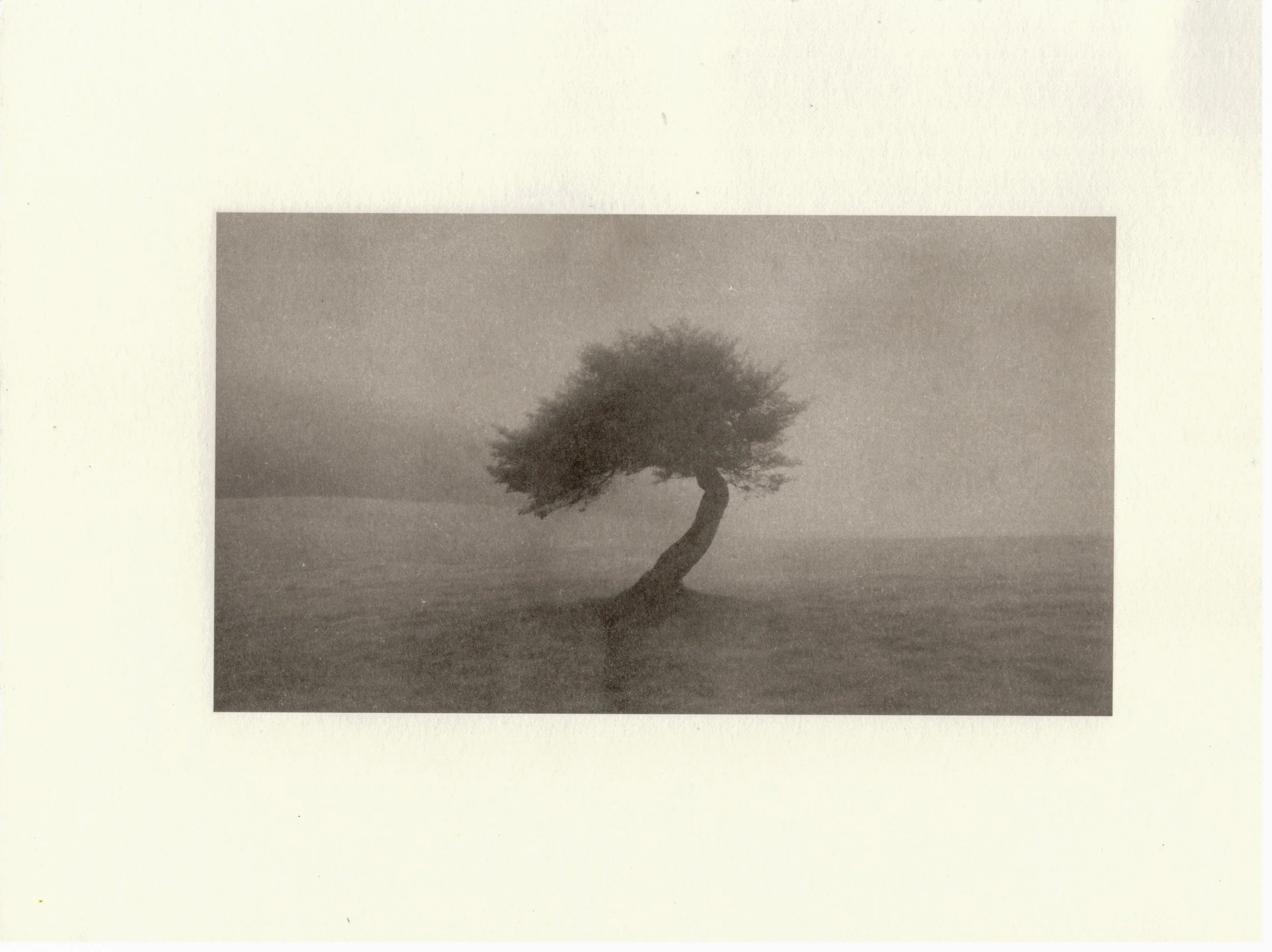
Platinum print, handmade. Origin: original photograph + Midjourney transformation.
Photography taught me patience. You wait for light. You respect reality. You compose without forcing. Even when you plan, the world still has the final say.
AI teaches the opposite. It encourages speed, iteration, and possibility. It asks you to try ten variations in the time it takes to load a single roll of film, and to keep asking: what if?
At first, it sounds like a conflict. But in practice, the two worlds strengthen each other.
The more I work as a photographer, the more demanding I become with AI. I notice when something feels too smooth, too perfect, too generic. I question what is believable, what is precise, what carries a real emotional weight.
And the more I work with AI, the sharper my eye becomes when I return to the camera. I pay closer attention to what truly matters in a frame: gesture, tension, silence, proportion, timing.
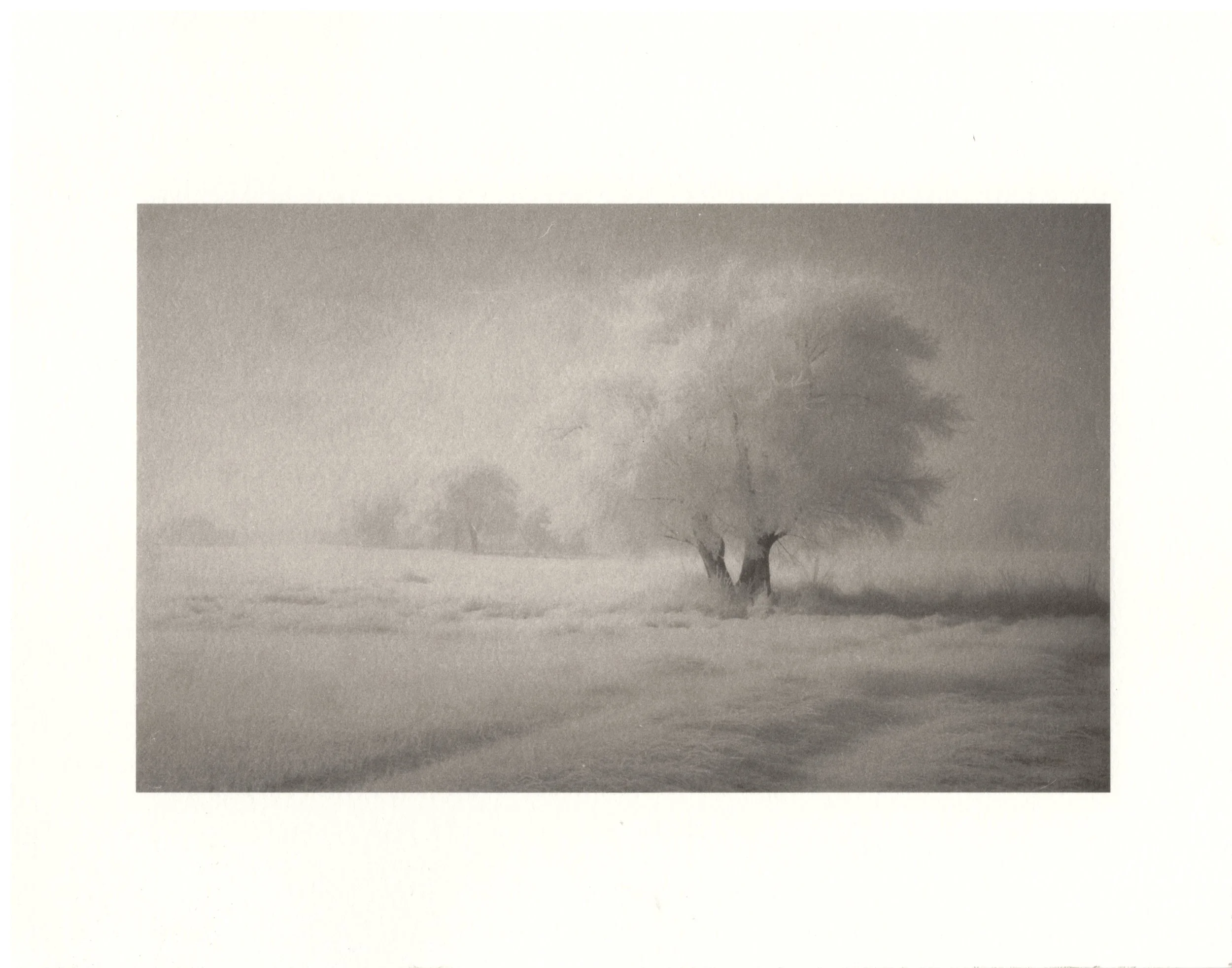
This blog post is about one image that traveled through that seam. A photograph I made in the real world, transformed through Midjourney, and then pulled back into the physical world through one of the oldest and most uncompromising photographic processes: platinum printing.
The Journey: Camera - Midjourney - Platinum
I like to think of this process as a three-stage translation.
1) The Photograph: A Moment That Actually Happened
Everything starts with an image that contains something I trust.
Not just subject matter - but atmosphere. A sense of time. A small truth that the camera can hold: a relationship between light and shadow, texture, distance, mood.
The photograph is not a sketch. It is the anchor.
It is the part of the process that cannot be faked, because it is built from observation and presence.
2) Midjourney: Asking the Image a Question
When I bring a photograph into Midjourney, I am not trying to “improve” it.
I am testing it.
I treat the AI stage as a controlled experiment. I ask:
What happens if the image shifts slightly in era, materiality, or mood?
What if the composition stays, but the emotional temperature changes?
What if the same scene becomes quieter, stranger, more symbolic?
In other words: I am not escaping photography. I am interrogating it.
This is where speed becomes useful. AI allows a kind of accelerated seeing.
It makes it possible to explore multiple directions quickly without a heavy production, without building sets, without travel, without a crew.
But it also introduces a real risk: the image can lose specificity. It can become “beautiful” in a generic way.
That is why my photographic eye becomes the filter. I keep what feels true, discard what feels decorative.
3) Platinum Printing: Returning the Image to Matter
After the AI stage, I do something that might seem extreme: I bring the image back into the slowest possible world.
Platinum printing is physical, demanding, and honest.
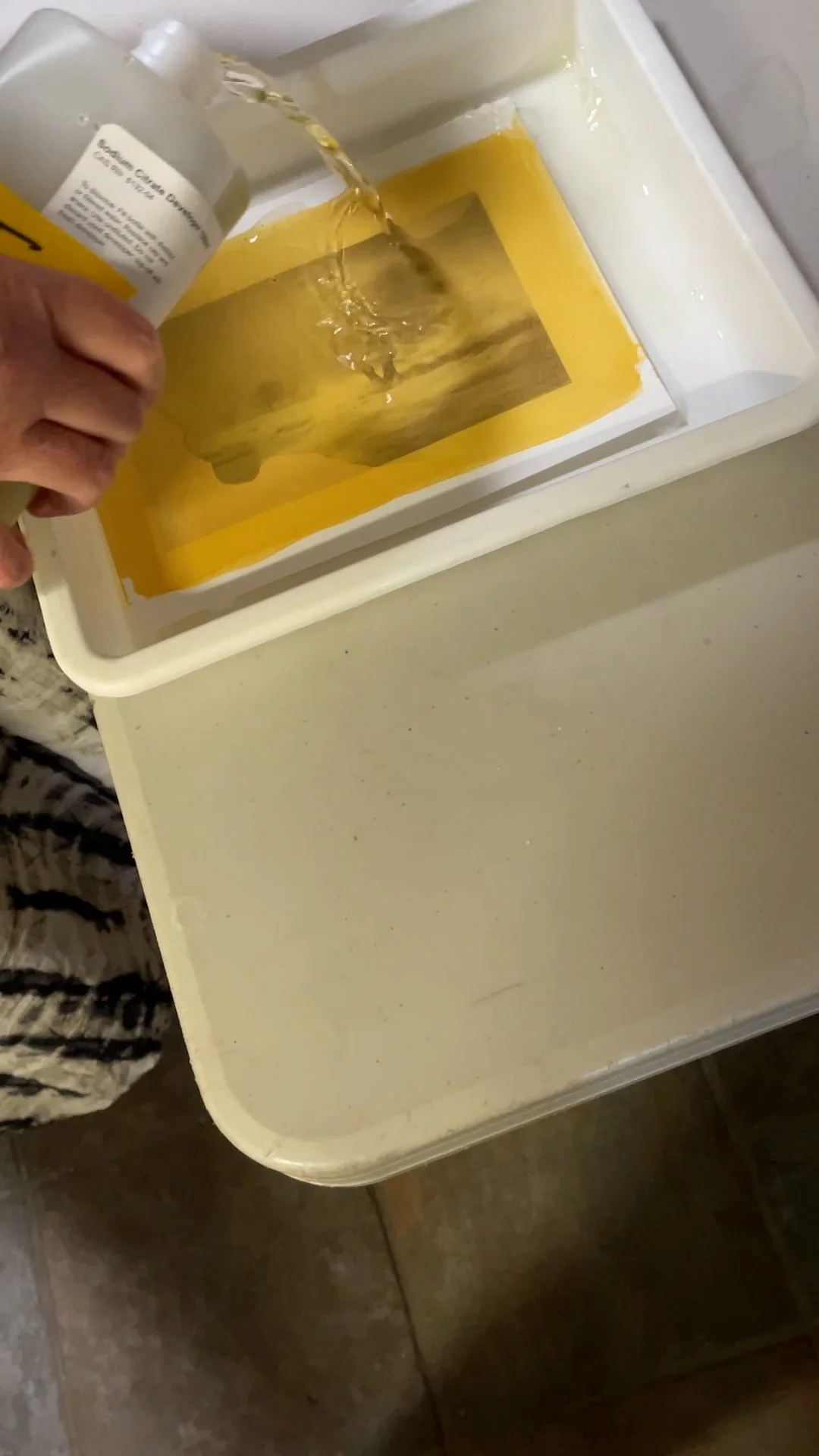
It is chemistry, paper, coating, drying, exposure, development. It takes time. It requires attention. It is not forgiving.
And that is exactly why I love it.
Because it removes the illusion that an image is just data.
A platinum print is not a file. It is an object. It has weight, surface, and presence. It carries light differently. It changes as you move around it. It asks you to stand still.
Each print becomes a singular outcome, not an infinite copy.
And that shift changes the meaning of the work.
Why This Extreme Contrast Matters
There is something deeply contemporary about moving an image through these extremes:
from captured reality
to algorithmic possibility
to handmade permanence
AI represents abundance: endless versions, endless options, endless speed.
Platinum represents scarcity: one print, one surface, one decision.
And the photograph sits in between as the ethical anchor - the original act of seeing.
When I bring an AI-transformed image into platinum printing, I am asking a very specific question:
Can a digitally accelerated image hold up to a process that reveals every weakness?
If the image survives platinum, it earns its presence.
Because platinum does not flatter. It reveals.
What I Am Really After: A Moment That Holds Truth
I often say that I am not chasing novelty.
I am chasing precision - emotional precision.
Whether I work with a camera or an AI model, I want the same thing:
a moment that holds truth.
Not necessarily documentary truth, but visual truth:
the kind you can feel in the body
the kind that stays with you
the kind that cannot be reduced to a trend
That is why the process matters.
Not as a “cool technique,” but as a way of protecting meaning.
Where This Leads
For collectors, designers, and institutions, this hybrid route creates an unusual object:
a work that begins in real observation, travels through a contemporary toolset, and returns as a rare physical print made by hand.
For me as an artist, it is a way of holding both worlds at once:
the discipline of photography
the freedom of AI
and the integrity of craft
The future is not purely digital. And it is not purely nostalgic.
It is a conversation between time scales.
And this is my way of having that conversation - through images.